HustleandHeart
Client case study: premium group program sold out before open to buy

Client case study: premium group program sold out before open to buy

I first met Keppie when I enrolled in a short course in song writing at the Sydney Conservatorium of Music. I don’t fancy myself a song writer. But I do follow my curiosity, and when the thought bubbled up that I’d love to try writing songs, a quick Google search later, and I was enrolled in the course.

What I wasn’t to know was that this was the last face-to-face course the teacher, Keppie Coutts, would teach.

The course was brilliant and massively challenging – for reasons to be detailed in another blog post (because deliberately doing hard things regularly is a great practise for business owners, and gave me fantastic insights as a teacher, into how some of my students may feel).

But meeting Keppie was the real treasure.

Keppie Coutts and Benny Romalis together make up ‘How to Write Songs’ (HTWS), a business and YouTube channel they started together in 2021, which they have since grown to a whopping 118,000 subscribers.

Their story showcases content marketing and digital marketing in action – and this case study will highlight many savvy online business strategies, including exponential email list growth using one specific strategy, effective email funnels and sales pages, launch planning, and creating, launching and selling out a new flagship, premium group program – before it’s even open for sale.

Migrating people from socials onto your email list

When I started working with Keppie and Benny in 2023, they’d already started migrating their YouTube subscribers – numbering about 80,000 at the time (now 119,000 at the time of publishing) – onto their email list.

In the space of six short months, their email list had grown from approximately 800 subscribers to 18,000, using a strategy called ‘content upgrades’.

Content upgrades is the offer of additional content (typically in PDF format) that’s closely related to the topic of the free content you’re sharing (in this case, on YouTube), via a sign-up form. Content upgrades typically don’t have much of a funnel behind them, beyond delivery of the PDF, and people were joining the HTWS list from dozens of different video links, on dozens of different topics.

When an email list is growing rapidly, and through multiple entry points, it can create a haphazard experience for the subscriber, and result in higher-than-necessary levels of ‘list churn’ (when subscribers join and unsubscribe in high numbers).

Keppie and Benny engaged me to give strategic advice on email marketing and to create a mega ‘welcome funnel’ for all new subscribers.

Keppie Coutts online programMapping the state-of-play and creating an email strategy

With any business that grows rapidly, it’s easy to create some chaos behind the scenes. So writing an email strategy for How to Write Songs began with mapping their current state-of-play.

Through a VIP Day session, Keppie, Benny and I discussed the ideal client profile for How to Write Songs, all the various paid and free offerings currently available, and what offerings were a match for songwriters at various different points of their journey.

Says Keppie, “Brook took the time to deeply understand our business, our vision, and what makes us tick, so that she could develop our vision, strategy, and tactics.”

From this brain-extracting session, along with data from their YouTube channel, their website, and email marketing software, I crafted the HTWS email strategy, which included recommending that they create a new, premium flagship group program for their ideal client.

Creating a mega welcome funnel

A welcome funnel can be as brief as a single email and is typically 3-5 emails. For HTWS, I crafted an eight-email sequence for all new subscribers, regardless of the email list entry point.

The welcome email funnel was diverse: some emails were based on the most popular YouTube videos and linked to relevant resources; some were pure storytelling, focusing on the relevant stories that introduced Keppie, Benny, and the common shared experiences of songwriters, musicians and music lover; and all emails was useful and valuable to the audience.

“Brook is a brilliant storyteller, seasoned wordsmith, and savvy strategist,” says Keppie.

Every email in the funnel had a different call-to-action and most emails linked to a different paid offering. For all business owners – but particularly for creators such as Keppie and Benny, who give away substantial free value regularly – it’s a smart idea to introduce paid offerings to subscribers straight away.

This could be a tripwire (the first low-cost digital product offered to increase first customer acquisition), but it doesn’t have to be.

By introducing your paid offerings right from the beginning of the email relationship, you’re signalling to your subscribers that you’re a business, not just a content creator, forever giving away highly valuable content.

In mid-December, Keppie put her (then) 20,000 email subscribers through the new welcome funnel. From that point on, any new subscriber who joins the HTWS list, through its various entry points, goes through this email sequence.

Introducing a new premium group offering

HTWS earn revenue from YouTube ads, had a close community in Patreon, a paid subscription services typically for artists and creatives. Keppie and Benny also run periodic live workshops (sold through Eventbrite), and earn regular revenue from their two on-demand courses, priced under $40, on Udemy.

I introduced the idea of a premium offering to test the market for something more substantial than a one-off live workshop or on-demand training, and Keppie and Benny were keen to explore this.

In January 2024, I began one-to-one business coaching for Keppie. Together, we focused on developing a preliminary sales page (to create a waitlist for the premium program), a proper sales page, a launch plan and a sales funnel.

“Brook’s coaching around pricing was absolutely invaluable,” says Keppie. “We initially envisioned selling this at $1000, and thought this would be an epically hard sell.

“But Brook encouraged me to consider pricing from a bunch of different perspectives, including what musicians typically spend on fairly basic guitars. She helped us to aim for a far higher, more realistic number and gave us a solid grounding on the psychology behind pricing, value, and communicating this.”

The final two emails in the welcome funnel that I had written for HTWS included invites to join the program waitlist, through the program’s preliminary sales page.

Within a few weeks, their interest list was already at 400 people, validating the idea that the HTWS audience had an appetite for a deeper, more transformative song writing experience.

But the ultimate validation of any idea in business is when people pay.

Within a few weeks, it was clear that offering one-to-one sales calls was no longer viable due to the size of the program waitlist. Keppie was keen to ensure that people on the waitlist appreciated that this was a premium investment, especially considering the far lower price points of other HTWS offerings, including their live workshops and bootcamps.

Selling through video

I introduced Keppie to one of my favourite tools – VideoAsk – which enables you to have asynchronous sales conversations. This can be far more appealing and less intimidating for potential clients, while also enabling people to ask you any question, share concerns, and have a personal experience with you, the business owner.

Keppie had also used a casual, non-scripted sales video specifically for the program waitlist people, to talk through key aspects of the program. All details covered in this casual sales video were already on the preliminary sales page, but this video adds a personal touch, and is especially good for people who prefer video to reading.

While Keppie and I were confident that the launch strategy would work, the results exceeded our expectations.

Within 2 weeks of the first email with the VideoAsk, Keppie received approximately 100 VideoAsk responses, engaging with potential clients well before the official ‘open cart’ (when the payment buttons are live on the sales page and people can buy).

What happened next continued to outpace our expectations.

VIP spots sold out before open cart

As discussed early, the ultimate (and only real) validation of any new offering is when someone purchases.

To our great delight, HTWS sold out all 10 VIP spots of their new premium program and – at the time of publishing – had sold 7 of the remaining 20 spots.

But the best part? Open cart hasn’t even happened yet.

It looks highly likely that all 30 spots (10 VIP and 20 at the regular price) will be sold out well before close cart, and Keppie and Benny are already scheduling their next launch for their new premium program.

Says Keppie, “Brook is amazing at what she does and has been incredibly important to have in our corner while we go through this massively exciting period of change and growth.”

“I honestly would never have had the confidence, strategy, or understanding how to make this happen without her strategy and hands-on help.”

If you’re keen to create, launch and sell out your own premium group program, that’s specifically what our Leverage mastermind is designed to do. Keppie engaged me for a VIP Strategy session, followed by one-to-one business coaching. 

Launch event trends in online business

Launch event trends in online business

Read this first, if you’re about to launch a course, membership, program, digital product, or new service package.

Some (tired, cynical) owners may suggest that online launching is saturated. Another take: the market is now sophisticated – which isn’t a bad thing! Selling online offerings through ordinary launch events used to be easy (or at least, easier).

Nowadays, people know better.

We have choice. We have competitors. We have lost our naïve enthusiasm (though hopefully, not our enthusiasm).

We’re far less likely to purchase because of marketing razzle dazzle and far more likely to do our due diligence – all good trends for ethical, conscientious business owners like you and me.

Launching is more than just a one-time open-cart/close-cart event – it’s a fantastic opportunity to raise visibility, grow your email list, capture attention and increase your sales. And not just for the offering that you’re launching, since more eyeballs overall tend to bring more sales across your business offerings.

From immersive virtual reality experiences to gamified challenges and influencer collaborations, launch events create buzz, foster community engagement, and ultimately, drive conversions. Whether it’s leveraging the power of live streaming or incorporating interactive elements, the key is to craft a memorable and impactful experience that resonates with your ideal client group.

In this article, we’ll explore the latest trends in virtual launch events for online businesses, the pros and cons of each, and where it may make sense for you.

Remember, there are no rules. You can combine your creativity with strategic execution, to ensure that your launch events are not only profitable, but also fun for you to run.

Free challenges

My Life’s a Pitch! challenge ran in February and was a lot of high vibes and fun, as well as being highly profitable. Eighty per cent of people who joined my Hustle & Heart program afterwards, had gone through the challenge in February, which just goes to show that you can convert people from free, to premium-priced.

Challenges can be awesome because they involve DOING, not just learning. A highly effective challenge focuses on a defined goal or outcome, with practical training given towards that end.

A free challenge can lead neatly into a successful launch because you’ve already demonstrated your results for participants, and at no cost to them. So it’s easy for participants to see how paying to work with you would bring an even higher return for their efforts.

Some key trends in free challenges that make a lot of sense:

  • A small paid upgrade ($10-$97 works well) offered after people register for free enables the owner to neutralise the cost/risk of running the challenge AND giving serious participants massive extra value at a small price. For the second time in our Life’s a Pitch! challenge, I offered a $55 Mentoring Circle across the five days of the challenge. This worked really well, even better than last time, and will be continued.
  • How can you make your challenge as binge-worthy, fun, and potentially viral as possible? Gamify, baby! Everyone loves winning prizes, yes?
  • Surprise and delight: give more than participants are expecting. Within the theme of the challenge, could you introduce surprise expert guests, bonus downloadable resources to complement what you’re teaching, or other delightful surprises?

Pros of free challenges

Building your credibility: When you sell services, you sell promises, so you need to demonstrate that you know what you’re talking about by giving away your expertise online. Free challenges enable you to share generously for a defined outcome. It builds a lot of authority, credibility and engenders trust with your audience. I fondly remember participating in another coach’s ‘$10K in 10 days’ challenge and how satisfying it was to exceed this goal!

Energy and momentum: The vibe and energy created when a group of people come together online, around a shared purpose or outcome is not to be underestimated. Courage is contagious. The momentum created is precious for all involved, including the organiser.

Teaching and training: If you’re a teacher or trainer, a free challenge is likely your style because you get to show off your teaching chops, get outcomes for participants, and (depending on the length of the challenge) give feedback or further insights on their results.

Lead Generation: A free challenge allows you to capture the contact information of interested individuals, providing you with a valuable list of leads to nurture and potentially convert into paying customers.

Cons of free challenges

Your time and energy: Running a challenge is not for low-energy, quiet owners. It requires significant time, effort and energy to provoke and inspire engagement in your challenge. It also requires time and energy from participants. The longer the challenge, the harder it is to get people to engage.

Low engagement is not your fault, but it is your problem: Low or no engagement in business is oftentimes not the owner’s fault, but it becomes the owner’s problem. For example, if I repeatedly register for free challenge or other free online goodies, but fail to engage with them, not only do I NOT receive the benefits, but I may begin to resent the online business world and blame those who I perceive responsible – online business owners. So it becomes our problem when people DON’T engage with your free challenge, don’t receive the benefits, and become more cynical, sceptical and disengaged.

(Makes no sense? Welcome to human-ing.)

Live webinars

Live webinars were the original launch event in the ‘olden days’ of online business. The business owner teaches something useful, valuable, and – most importantly – relevant to the audience, demonstrating their expertise, style and approach, on a topic designed to lead neatly into the launch.

Then online marketers ruined everything (as we do).

Trust was eroded through fake ‘live’ (actually pre-recorded) webinars with fake countdown timers, and even fake comments by dummy ‘participants’. Combine that with over-the-top messaging pressuring people to turn up live (or risk being an idiot) and you have a decline of this launch tactic.

But all is not lost! Webinars can still work wonderfully, when done well.

Some key trends in live webinars that make a lot of sense:

  • Does it need to be an hour? Absolutely not. Could you do it in 40 minutes? Or 20 minutes?
  • Do you need to pressure people into turning up live? Absolutely not. In fact, this can put people off.
  • The topic of the webinar counts for 98% of its success (that is a made-up statistic). Be original! Be memorable. Be specific – specific is genius. Get obsessed by your ideal client group and hone in on a topic that sits neatly in the middle of what they’re obsessed by and what you’re selling (hint: they’re likely NOT obsessed by what you’re selling).
  • To state the bleeding obvious – because common sense isn’t common – don’t lie, don’t mislead. If it’s not live, don’t pretend it is. If you plan to run the same webinar next month, don’t pretend it’s a one-off event.

Pros of live webinars

Engagement: One of the key strengths of live webinars is interactivity, enabling the owner to create engagement, rapport and trust. If you’re genuinely interested in others, good at thinking on your feet and love surprises, then you’ll have an advantage here.

Lead generation: Ads to webinars tend to be higher than other things such as downloadable lead magnets or even ‘on demand’ free video training. But if you’ve got a good grasp of your key metrics, then you can still make PPC ads to live webinars profitable. Make sure you have a follow-up email sequence and don’t abandon your new subscribers, or just add them to your regular emailing.

Live sales excitement: There’s no better rush than sales coming in while the live webinar is still happening (and no you don’t need huge numbers for this to occur, but you do need to have warmed people up beforehand). The sense of urgency and exclusivity can motivate attendees to purchase quickly.

Cons of live webinars

Technical challenges: While I’m a huge fan of simplifying tech and not using more than necessary, live webinars aren’t for those uncomfortable with tech or the inevitable glitches that occur. You need strong internet connection and either a tech VA or a solid ability to troubleshoot (yes, oftentimes in front of your participants) without letting setbacks steal your thunder.

Selling one-to-many: If you’ve never ‘sold from stage’ before, it’s a wild ride! It’s best to seek out more low-stakes opportunities to practise this BEFORE you’re in front of people (who you may have paid/advertised to, to be there). If talking sales and money makes you break out in a cold sweat, this is likely NOT the launch tactic for you (or rather, not right now).

Time and time zone constraints: In an increasingly global world where time is a luxury, the time required to turn up for a live webinar, at a convenient time, in your particular time zone, makes less sense than when quality online learning was far less common. It’s increasingly typical for participants to sign up for a live webinar to “catch” the recording, or to attend a live webinar while driving, eating, or otherwise multitasking. Yes, we know multitasking isn’t ideal, but it’s a bit daft to shame participants for doing this.

Virtual summits

A virtual summit is similar to a conference, involving one or more hosts, and a variety of speakers, focusing on a topic or industry. Virtual summits can be huge, involving dozens of speakers and workshop presenters, run over several days, and featuring internet famous leaders. But they can also be intimate, very niche, and run without fanfare, with minimal tech.

Some key trends in virtual summits that make a lot of sense:

  • Audio-only virtual summits – what’s not to love? Unless you’re doing a technical demonstration, you likely don’t need slides, and participants often appreciate the accessibility and ease of a private podcast for your virtual summit.
  • Highly niche summits to hone in on your ideal client group, and find your weirdos/people.
  • Live Q&A in closed groups, to follow immediately after your (typically pre-recorded) training is released.

Pros of virtual summits

Collaboration and cross-pollination: By virtue of featuring multiple speakers or experts, virtual summits facilitate collaboration and cross-promotion, enabling you to borrow each other’s audiences in order to grow your own. If you’re super strategic and thoughtful, this is a great opportunity to introduce yourself to online business owners you’ve been admiring for some time, and invite them to present.

Low cost lead generation: Virtual speakers can help you generate a large volume of new leads for a low cost (or no cost if you’re a contributing speaker, and not a summit organiser).

Content rich and recycling: The recorded sessions from a virtual summit can be repurposed as evergreen content, extending the value and potential for lead generation, as well as marketing fodder, long after the event.

Cons of virtual summits

Tech and project management: Virtual summits aren’t for owners who aren’t strong with tech. You’ve got a lot of moving parts to organising a virtual summit, requiring significant project management, more communication than you likely appreciate, and solid tech skills, if you’re to pull this off without a mental breakdown.

Participant overwhelm: Virtual summits can easily overwhelm participants who don’t have strong digital boundaries and systems to manage and participate properly. As discussed already, this may not be your fault, but it becomes your problem because overwhelmed people don’t buy (and when they do, they don’t make the best clients).

Virtual summits can be fantastic as a long lead-in to your launch, rather than a launch event proper, which means you could run a virtual summit eight weeks out from your open cart, to increase your leads, visibility and reach, and use other launch events closer to open cart and close cart.

Other notable trends in launch events

Other notable trends in launching include audio-only events, such as an audio-only summit, a free challenge delivered via private podcast, Telegram, WhatsApp or Voxer. Audio events, typically run through private podcast technology, has an intimacy and simplicity which is hugely attractive, while making it easier for participants to engage and, as a result, benefit.

Selling through video is on the up-and-up, but not the glossy, professional sales videos you’ve likely seen. Deliberately casual, non-polished and mobile phone-filmed sales videos can be a great supplement to a long sales page and is part of the trend towards authenticity in business and marketing.

In the age of information, and as digital marketing reaches maturity, it’s easy to lose people in the rush of a launch. So the trend towards one-to-one reach-outs makes a lot of sense.

Whether through video, email or social media, one-to-one reach-outs to people who you either know already, or who are actively engaging in your launch, is a great way to show people that you actually recognise them and are genuinely interested to see if you’d make a good match to work together. No, it’s not “bothering people”, it’s showing them that they aren’t an email address, but a real human who you’re forging a relationship with.

Layering multiple launch events can help build momentum, grow your list, and ultimately, increase your conversions. Think: a virtual summit 6 weeks before open cart, a free challenge (with paid upsell) two weeks before open cart, a series of IGTVs after the challenge, a live webinar on the day of open cart, a live ‘Ask me anything’ three days before close cart.

Yes, I appreciate that this sounds like a lot of work. But if you’re great at planning, and consider how each event would build on the last, creating a series of waves into a crescendo, this could be a lot of fun. And, for course, you want to create adequate buffer for rest and rejuvenation throughout (don’t wait for the end! Sprinkle fun excursions for yourself, throughout).

There are no rules in business (except to exchange cash for value). Everything else is up to you. Any launch event can work when you consider it strategically as well as energetically, and ensure that it suit your strengths, hindrances, and preferences.

I have run launches that have netted me $20,000 or $50,000 without a single launch event (selling through email, with some social media posts), and I have run launch events that have made only a tiny difference to my launch, so don’t feel these are essential to having a successful launch.

But if you take the attitude that everything which raises your reach and visibility is ultimately beneficial, then launch events can be hugely fun, social, and profitable to boot.

Behind the scenes of my 2023: the good, the bad and the ugly

Behind the scenes of my 2023: the good, the bad and the ugly

February is not too late for a ‘year in review’ post, right? 2023 was another big one for me, and different again from the years that preceded it. Time does seem to be accelerating and while I’m still using my historical data to inform decisions, I’m only looking at data from the last 12 months, not data from the last 3 or 5 years, because 2020 onwards has been so volatile.

Get yourself a cuppa and settle in, because this is a long one, combining both business and life (because seriously, these things are seriously intertwined) with as many useful details as possible, so you can get value from what I’ve done (including maybe what NOT to do).

This article includes:

  • What I sold
  • Highlights of 2023
  • Disappointments of 2023
  • My best-performing marketing in 2023
  • What I’m doing differently in 2024
  • Future trends I’m paying attention to
  • What I’m looking forward to in 2024
  • My personal focus in 2024.

What I sold in 2023

I ran Summer Bootcamp accountability program from December 2022 to January 2023, to encourage owners to do bare minimum marketing and business development, over the (Australia) holiday season, when business is typically far slower.

Matera ItalyI ran my full-day online business retreat, Business Reset in February, June, and November.

Our Business Reset in February had great numbers, which also served as a lead-in for the Hustle & Heart program, acting as a free bonus for program participants, as well as a ‘try before you buy’ for paying participants who wanted to check me out before committing to six months of working closely with me inside of the program. I did this again in June.

I launched and ran two cohorts of my flagship Hustle & Heart program, in February and June. February was a much larger group, with about two-thirds coming through my November 2022 promotion (committing early to the program). This made the February launch less stressful because I already had good numbers before the launch had even begun.

The surprise performer was my Lifting the Lid on my Online Launches masterclass in March. It had a high number of checkout views and a higher-than-normal attendance. Not surprisingly, because I shared a huge amount of invaluable real-life data for a normal-sized business (ie: I don’t have a massive email list nor huge social media followings). This left me with a pretty wicked vulnerability hangover.

This was the first live masterclass I’d done for a while (I did a lot of live masterclasses throughout 2021) and, especially at the $97 price, it proved very popular.

I ran the Writing Sales pages (that sell!) course in May, following my Life’s a Pitch! free challenge. Writing Sales pages (that sell!) course is a great course for any owner or copy writer who wants to know how to turn their words into money with excellent, high-converting sales copy, however the numbers were far lower than they should be, especially as it has a waitlist.

I suspect this was because of the incongruence between the price and the value (which, funny enough, is part of what we cover in the course!). So I’ll be changing up the course and increasing the price to better reflect the (significant) value. (Register your interest here.)

And in September, I launched the Leverage Mastermind, with my collaborator Simon Kelly! (See more, below.) 🎉

Highlights of 2023

Hands down the most exciting part of the year was travelling! In September, my family and I had five and a half weeks in Italy and England, to visit my in-laws. We hired a car in Rome and drove south, exploring the region of Puglia (the ‘heel’ of the ‘boot’ of Italy), before flying to London, to hire another car to drive to North Wales, then Essex.

It was in the gorgeous ancient town of Matera that I closed the doors to our Leverage Mastermind, and hosted our first group call with an intimate cohort of owners who are leveraging their time and elevating their expertise through creating and selling out their own flagship group programs.

It felt bloody marvelous to welcome the group, and then wander down the road in beautiful Matera, to celebrate with my partner and daughters over lunch, with prosecco of course. Woo hoo!

I kept a ‘work diary’ in a Google doc throughout my trip, that I shared with clients, to keep me honest. It was encouraging to see how few hours I could work while traveling (some days not at all, or 40 minutes, the biggest days during the mastermind launch, were four hours), while still making sales and service clients.

This really motivated me to be more discerning with my time and hone my focus more on value-generating activities (such as making sales!).

Having a Leverage Mastermind sale come through when flying to Europe was a total buzz, and flying home, from London to Sydney, another invoice was paid. Work was lined up and sales were made while I was enjoying my holiday. Yay for online business!

Malaysia Kuala LumpurI also traveled twice to Malaysia in 2023, to run five courses in total – three courses back-to-back in May and two courses back-to-back in August (I was seated two rows behind the attempted hijacker. I had to really hustle to get myself on the last flight out of Sydney, and was the only passenger that managed to do so, arriving at 5am to start my course at 9am). My partner Pete joined me in May and we had a great three-day holiday (sans kids), exploring the streets of Kuala Lumpur and eating far too much.

I (finally) launched my podcast, Meaningful Work, Remarkable Life, after many years of thinking about it. I had even planned out 100 podcast titles, while in a bubble tent in the rain on holidays! (That was fun, lying in bed listening and watching the rain, and dreaming up ideas on my Google Doc mobile app.)

Highlights of 2023 have also been appreciating that I’ve built my life around my business (not the other way around) and slowing down after a very busy and sometimes (way too) stressful 2020-2022.

My sister was pregnant, then on maternity leave, then had her first baby, the totally chill Louis. She often dropped in for a swim mid-week, which was a great reminder to stop working and enjoy every moment. Now she’s returned to working in the city, no doubt, she’s thinking fondly of lazy days around my pool too …

Disappointments of 2023

Overall, 2023 was slightly less revenue and profit than 2022. This was mostly due to the last quarter of the year, when I was traveling, as well as occupied with our lovely Leverage mastermind cohort, and creating training materials with my collaborator Simon Kelly. That meant less time for other things, such as a short, live course or promotion.

Malaysia gold Buddha

When analysing my year in review, it was clear that I hadn’t timed courses and promotions well enough – with nothing scheduled in October, November or December.

I like to plan my year in quarterly sprints, with quarterly holidays (we had a few mini breaks, over Easter in Sussex Inlet, NSW, and Magnetic Island with friends and family!) I love having a couple of quiet days away by myself in November, which acts as a circuit breaker for the busyness of December. I didn’t organise myself last November, and I felt it. Some quiet time alone, or with a small group of fellow business owners, can make a massive difference to my energy levels, particularly at that time of the year.

I also did far less custom training and keynote speaking in 2023, after a stellar time in 2022, when I was flown to Melbourne twice.

In the last quarter of the year, I relied too much on recurring revenue from payment plans and VIP Strategy sessions which tend to sell really well in the last quarter of the year, as people push forward in getting help for those big projects that haven’t yet happened.

My best-performing marketing in 2023

In 2023, I increased my average mass email send, from fortnightly to weekly. I sent 54 mass emails over 2023 (and many many more, to smaller, targeted segments of my list). I also did something smart which was also really simple (my favourite kind): I had my assistant pull out my best-performing email subject lines and I recycled these.

These two things – more frequent emails and recycling top-performing email subject lines – netted me an average increase in open rates of 12%. That’s a great result, and I’m doubling down on this, to try to increase this further.

Alberobello, ItalyMy click-through rate is lower than I’d like, but that’s the problem with sending longer emails with multiple links – generally, the shorter the email with the fewer links (or just one link), the higher your click-through rate will be.

My top-performing email subject lines for 2023:

  1. {REGISTER} The future of premium group programs
  2. The real reason why you haven’t hit your $$ target yet
  3. Rewiring your brain into BOSS
  4. Divorcing your self-worth from your productivity
  5. 5 most common mistakes when moving from one-to-one to group
  6. Joy & profit
  7. I’m missing you
  8. Every day I have the blues
  9. Who’s afraid of accountability?
  10. Your secret weapon in business

I did a lot of podcast interviews (you can listen to them in this playlist here) and collaborations throughout the year, particularly online summits and bundles. These aren’t new, but continue to outperform other email growth strategies such as (awesome) lead magnets.

I did fewer speaking gigs and training in 2023, so I’ll be focusing on increasing this, as this also typically results in new clients.

I still get a steady stream of quality leads and inquiries through Google, so business blogging (and optimised long form content, such as a podcast or longer videos that sit on your website) remains a great ROI marketing strategy that I’ll be continuing. (I’ve been business blogging continuously since January 2010 and its netted me a lot of business while enabling me to explore my thinking and showcase my ideas).

What I’m doing differently in 2024

ItalyMarketing

My marketing has also become a lot more complicated this past year. For many years, when I taught social media marketing, I was on all the social channels to learn and observe what was working. But I don’t need to be there anymore, especially if it serves little purpose.

Nowadays, Instagram and LinkedIn are my main two channels, with Facebook a close third, particularly Facebook groups (my own and others).

I want to spend more effort on TikTok as it has a far greater reach than Instagram. I regret not taking my own advice and getting onto YouTube more seriously. So, I will be further streamlining, systematising my efforts, and recycling my content as much as possible.

The podcast was just as much work as anticipated, which is why I postponed it for as long as I did. Eventually, a workflow process was ironed out in Asana (this is the tool I use to organise projects) but this is still laborious. I can batch-record episodes in threes (which is the extent of my voice and mental acuity), but things become a lot more complicated with guests.

I’m getting better at showing “the work behind the work”, which was a key goal for 2023. This includes sharing what I’m doing as I’m doing it (rather than sharing the glossy after photos), sharing screenshots of positive clients’ messages, and giving as much useful detail as I can (such as this article) in the hope that it helps others.

In the last quarter of the year, every time I did a short, live, ‘behind the scenes’ of a VIP Strategy session, another one was booked! Easy.

Sales

I noticed a lot of sales calls in 2023 were from unqualified leads, which was frustrating, because I have strong boundaries and a clear process that makes it abundantly clear to people that sales calls are sales calls (not a forum for people to think out loud with me).

I want people to be armed with all the necessary information to make a decision, with the sales call being the final cherry on top. I have detailed sales pages (with pricing), plenty of value-paced free resources that people are welcome to. I have videos so that people can get a sense of me and whether or not I’m their cup of tea.

The job of marketing is to do the heavy lifting of sales for you.

More frustratingly, many of the people I had sales calls with hadn’t taken advantage of my lead magnets, despite me prompting them to do so.

Conversely, as always, I’ve made most of my sales from people who I’ve never met, who didn’t book a sales call. People are buying my high-ticket programs and masterminds without sales calls.

This creates a dilemma – I enjoy sales calls with people who are prepared, who are an easy ‘yes’, and who are only really talking to me out of curiosity, having already decided to buy. These are fun, upbeat conversations with like-minded awesome folks that leave both of us feeling amazing about our working together.

I’m undecided as to what to do.

Offerings

I love training, coaching and facilitation. In 2024, I’m entering my 16th year in business and 11th year in business coaching and training. I’m focusing on owners and leaders who are ready to claim their expertise, elevate their brand, and leverage their time.

I’m also offering mentoring for coaches and marketers, having worked with many in the past, who sought me out because they wanted to redesign their business model, free up their time, and have a confidential sounding board to debrief on complex or tricky client situations.

While I enjoy training, in all its different facets, I love facilitation more – bringing together savvy, ambitious groups of owners and leaders who know they can go far further, far faster, together. We all need more support in business than we’re likely getting, and I love supporting and cheering on owners as they outrun their fears and refine what impactful, meaningful, profitable work looks like.

Future trends I’m paying attention to

In 2023, there was a lot of attention given to AI, and particularly AI marketing, and whether there will still be jobs for marketers. I didn’t weigh in on this conversation online because I didn’t know enough to contribute something new.

It remains that people who resist change and cling to what used to work will be the first to be negatively affected when AI improves. Change is the only constant.

It’s clear that human ingenuity, creativity and that ‘special something’ is still required; businesses that are relying too heavily on AI right now are doing themselves a great disservice by eroding their brand point-of-difference. It’s never been more important to stand out, stand for something, and turn up the volume on your quirks, style, story, and unique approach, whether you’re a personal brand, or not.

As the economy tightens, there will be yet more movement in the small business space: some businesses will close as people spend less; more new businesses will open as the war on talent endures, and ‘return to work’ orders highlight the ineptitude of organisations who still can’t make hybrid work work.

Despite negative economic news, people are buying, but they are being more discerning, taking more time to consider large expenditure, and (in my experience), opting for pay-in-full more than payment plans.

The premium market isn’t affected by economic downturns, making this an excellent time to elevate your expertise, upgrade your branding, and position yourself as the expert in your field. (This is exactly what I help owners to do.)

Life design is trending, as people explore health pursuits such as sobriety, breathwork, anti-ageing foods, and time management trends such as working from home, hybrid work, three- or four-day work weeks and more. When the wider world feels scary and out of control, people look at what they can control, including their homes, lifestyle, families and health.

What I’m looking forward to in 2024

I’ve just launched a second mastermind, Audacious, which is for driven, ambitious business owners who are already earning six figures, and looking for a thought partner to make their next strategic, high-level move. It’s exciting welcoming new owners in, many of whom I’ve worked with in the past, and supporting them over the next six months.

I am collaborating with an overseas business buddy on something exciting. I can’t share anything yet! (Watch this space.)

In March, I’m heading to Hong Kong with my partner for some meetings, leaving the kids at home with my sister. My daughters are now far more independent now, making work-and-pleasure travel with my partner much more possible.

My focus for 2024

My mantra has been ‘How can I make this easier?’ This includes shortcuts, templates and ‘hacks’ (I frequently use my own templates for work, and turn the systems that are working well in my business into client resources). But it also includes how I think about certain things, including timelines.

When I feel into the belief that all my big goals are possible, and it’s only a matter of when, then I free up the timeline for everything to happen today. I can hold onto that feeling of expansiveness and excitement without the grasping dread of feeling like time is running out.

The truth is, we live a big, full life, with lots of travel, plenty of parties and people, and mid-day swims, bushwalks, reading and relaxing. There is absolutely nothing that is ‘wrong’ or in need of changing. And yet (and yet), I am ambitious. I have big goals for creating big impact through the ripple effect of entrepreneurship and business.

I want to be surrounded by similarly ambitious owners and leaders who know they have a wonderful life AND are striving for more. This is the paradox at the heart of Hustle AND Heart (love and money, profit and purpose, gratitude and ambition, etc…).

Thank you (and more please).

Your step-by-step game plan to future-proof your business

Your step-by-step game plan to future-proof your business

Apocalypse novels and dystopian novels were my favourite as a teenager. I loved losing myself in the end of the world, via a good book.

The last few years in business have been a deviation and felt, in the thick of March 2020 like the apocalypse has arrived. This deviation is being followed, thick and fast, with terrorism and war, cyber-attacks on corporations, and a global recession.

In business (and life), the ability to anticipate and adapt to change is paramount. The accelerating pace of change means that your business’s sustainability requires a future-focused approach.

In this article, I’ll share a step-by-step plan to not only future-proof your business, but also ensure your personal sustainability as an owner, to ward off burnout and ensure you thrive in the face of uncertainty.

Predicting the future

The first step in future-proofing your business is to cultivate a keen sense of awareness. This is a skill that I use when I’m marketing, especially when I’m preparing launch materials.

When I’m creating marketing, I let my awareness extend sideways, to listen into the zeitgeist – not of the year or month, but of the week and day.

We see plenty of fallout from brands who ignore the zeitgeist – forging ahead with tone-deaf marketing campaigns or out-of-touch messaging that alienates the very audience it was (purportedly) designed to attract.

The art of prediction is intimately related with awareness and listening. While it’s impossible to accurately foresee every twist and turn, we absolutely can stay informed of trends, use our own data and analytics (such as our email open rates and our Instagram or LinkedIn analytics) to significantly enhance our predictive abilities.

The future begins in the past. Says American novelist Pearl S. Buck, “If you want to understand today you have to search yesterday.” American journalist Norman Cousins adds, “History is a vast early warning system.”

Be careful that your awareness of history doesn’t tip into sentimentality or progress denial. Use historical context to help you understand human behaviour and predict future behaviours.

Suggestions:

  1. Participate in forums, conferences, and networking events, not just in your particular industry, but in complementary or adjacent industries.
  2. Read social media comments. These are a goldmine of insights into other people’s minds.
  3. Follow trendsetters and thought leaders in your industry – beyond the obvious mega personalities – to gain a deeper understanding of where your market is headed.

Building your resilience

In my Hustle & Heart program, this is part of the ‘heart’ – developing strength of character, and the resilience that comes of this. Resilient leaders have a constructive, proactive attitude, which makes setbacks, mistakes, hindrances, and failure par for the course.

Resilience is not “toughing it out”. It’s taking exquisite care of yourself, asking for help, utilising rejuvenation techniques, and getting comfortable with the uncomfortable.

Suggestions:

  1. Diversify your revenue streams so that you’re not exposing yourself to unnecessary risk. Your key offerings may well be applicable in several different ways, that don’t necessitate a complete redesign.
  2. Pursue opportunities to get out of your comfort zone: whether this is sales calls, pitching from stage, being more vulnerable in your marketing, or whatever else that scares you (that you secretly, really want to do).
  3. Establish a crisis plan or worst-case scenario plan: don’t wait until you’re in the thick of a crisis to decide what your plan of action will be. Having a crisis management plan in place enables your business to respond swiftly and effectively. This includes clear communication strategies, contingency plans, and a well-defined chain of command.

Grow your capacity

You know those individuals who have a disproportionate amount of responsibility, but look graceful and relaxed? That’s capacity.

Capacity building equips and empowers you, and your business, to handle increased demand, while enjoying yourself in the process.

Suggestions:

  1. Resilience starts from within. Even if you’re a company of one, foster a positive work culture. Design your week to create “meeting free” buffer, with time for research, learning, deep thinking, reviewing, and reflecting.
  2. Invest in automation, systems and processes: use technology to enhance your business’s capacity. Whether it’s streamlining service delivery processes, improving customer service through chatbots, or utilising data analytics for decision-making, integrating technology into your operations helps you build capacity, while protecting your energy.
  3. Change your attitude to stress: stress is normal and it’s not the enemy. Change your attitude towards ‘good’ stress and notice how much easier everything becomes when you’re not fighting the inevitable.
  4. Invest in training: as technology evolves, so should the skills of your workforce. Provide continuous training and development opportunities to ensure your staff or contractors are equipped with what they need to enhance performance.

Magnetising your community

Your community is essential to your business. Business is built on relationships, and in online business, this translates into your paying clients, email list, web visitors, social media communities, and the “word on the street” about you (aka: your professional reputation).

Building a strong and engaged community around your brand can provide invaluable support during challenging times, foster long-term loyalty, and increase sales and referrals. It also gives you invaluable insights to help you anticipate the future needs of your clients.

Suggestions:

  1. Invest in your communities: cultivate a sense of belonging in your online communities (via Facebook groups, WhatsApp groups, LinkedIn groups, etc), show the behind-the-scenes of your work, and engage authentically, creating a space where your people can connect with each other without you gate-keeping relations.
  2. Cultivate brand advocacy: exceptional customer experiences, actively seeking feedback, and incorporating client suggestions make it easy for your clients to become brand advocates. This is not about you as the hero of your brand, but rather, showcasing your clients as their own heros in whatever it is your business helps them with.
  3. Lead with your values: demonstrate your commitment to social and environmental causes through your initiatives. Whether it’s supporting local communities, reducing your environmental footprint, or championing ethical practices, this makes it easy to magnetise your community towards a common cause.

Be relentlessly relevant

To future-proof your business, you need to be relentlessly relevant – continuously evolving your business to meet the ever-changing needs and expectations of your ideal clients. This isn’t just about what you sell and to who. It also incorporates how you deliver it (https://www.hustleandheart.com.au/online-business-models/) , as well as your marketing and sales messaging.

What worked yesterday doesn’t necessarily work tomorrow, and evolving your business to be relentlessly relevant also ensures that you stay personally connected and inspired by what you’re doing – which creates its own momentum.

Suggestions:

  1. Take inspiration from a variety of sources. Innovation doesn’t happen by staying in your lane, or slavishly following your competitors. It comes from fostering creativity, making time to daydream, and exploring new ideas.
  2. Invest in your own thinking: this doesn’t mean being a perpetual student, never quite “ready” to launch. It means carving out regular space in your calendar to digest ideas and explore your own thinking on a topic.
  3. Speak with your ideal clients regularly: you can’t claim to be “customer centric” if you’re three steps removed from your ideal clients. Talking closely with a broad array of your clients (not just the VIPs), enables you to better understand their evolving needs.
  4. Stop blaming the algorithm: social media gives us immediate feedback on our messaging. Use social media to formally and informally gather feedback, conduct market research, and stay attuned to shifts in consumer behaviour.

Look at what scares you

We make business far harder than it needs to be by avoiding the inevitable or necessary, making up stories to justify our lack of decisions, and overcomplicating our offerings, marketing and sales.

Future-proofing your business includes future-proofing yourself: investing in your skills and attitude, protecting your enthusiasm, growing your capacity, and developing invaluable talents in prediction, resilience, capacity, community engagement, and relevance. Doing so enables your business to not only navigate the uncertain terrain ahead but also emerge stronger. The future belongs to those who embrace it.

5 invaluable strategies to get paid to grow your leads and email list

5 invaluable strategies to get paid to grow your leads and email list

Leads are the lifeblood of every business. Generating a consistent stream of leads and email subscribers is like a daily teeth-brushing hygiene habit – it’s essential, it’s unquestioned, and it needs to be daily for it to work. While the glory days of 2010 are long-gone, when a ‘Subscribe to our email list’ form was enough, growing your email list and attracting new, qualified leads doesn’t need to be impossible, nor expensive.

In fact, these five strategies that I’m about to share will see you earning income, while also growing your email list and attracting leads into your business. These are tried-and-tested strategies that I’ve utilised, some for 15 years, to ensure that I always have a consistent streams of new leads through my door.

Ads won’t save you

One of the major ways that online business owners build their email lists is through ads. This can be expensive and very complicated. Outsourcing your ads can be great, but it’s a significant, recurring expense, on top of what you’re already spending each month on ads. Learning how to manage your own ads takes time and commitment. So ads are not something I recommend to new business owners.

When we’re advertising for email addresses, we’re interrupting people who are otherwise scrolling on social media, and we don’t necessarily gain somebody’s trust right off the bat. It takes time.

And, it doesn’t solve the problem of trust. Yes, an email funnel and excellent emails can do this, but this takes time, skill and commitment.

Kill me through networking

Ah, networking! What a godawful word. And yes! Of course – before you come for me – businesses are built on relationships. And yes, networking with the right people can be absolutely invaluable, life-affirming, and fun to boot (in the best cases, a tax-deductible holiday).

The problem with networking is it’s hit and miss, yes?

How many times have I walked into a room and immediately known I was in the wrong room? How many times has a business networking event caused me to doubt myself, my choices, my life? (Maybe I’m being melodramatic, but hey? It happens.)

Networking can be expensive, time-consuming, or even impossible, depending on where you live or if you have significant hindrances to getting out.

Online networking includes social media marketing. A lot of owners spend a hell of a lot of time, effort and overthinking posting to social media (or thinking to post to social media). And it’s very, very time-consuming and can be notoriously slow. Again, social media is a slow burn, and better for nurturing relationships than for getting in front of new audiences.

Borrowing other people’s authority

The five strategies I’m going to discuss have advantages that ads, networking and social media don’t – first, they’re appropriate for brand-new businesses. In fact, I used several of these strategies in my early years of business. They were crucial to building my network, email list, and business.

Second, they’re excellent at establishing trust and authority right out of the gate. They primarily work by borrowing other people’s audiences and hence, other people’s authority.

Finally, I don’t expect that every single one of these five strategies will be relevant to use. Instead, I recommend you choose one or two, and commit. Then watch your audience, leads, and email list grow.

Speaking at events

Speaking at events – both paid and unpaid – continues to bring me a steady stream of new leads, while growing my email list. For this, you’re going to need storytelling skills and speaking skills. Being a bonafide expert in your field doesn’t necessarily make you a great speaker.

Speaking skills and stagecraft can be learnt through observation. I love watching the drama of speakers and how they move their bodies around a stage, their body language, and how they use the cadence of their voice to provoke a response.

When the topic of your talk and the topic of your lead magnet are closely related, then it’s easy to segue into pitching your audience for their email address, with far less friction. Of course, you can also sell directly from stage, but generally, a reputable event won’t allow this of its speakers, especially if speakers are paid.

Works best when:

  • You have a memorable lead magnet which you can build your talk around, or a talk you can create a memorable, relevant lead magnet for
  • You have at least one slide with a QR code taking your audience to your lead magnet landing page

Not recommended when:

  • You’re a boring speaker
  • Speaking on stage is your worst nightmare.

Training on other people’s programs

In 2012 or thereabouts, I went to a yoga class with renowned yoga teacher Mark Breadner. As I registered for class, I gave him my elevator pitch, and he immediately asked if I’d like to be a trainer in his yoga teacher training.

Of course, I said yes, though I’d never done it before. This became one of the major methods that I’ve used to grow my leads and email list over the last 11 years.

I would be paid to teach and train in other people’s courses, typically on how to start a business, and how to do your own marketing, as a soloist. And students would come back, several months, or more often years later.

I’m still a teacher and trainer on other people’s courses, and I develop training on behalf of training institutes. This is great for developing and co-creating your methodology. You’re practicing your densely branded language. You’re practicing developing and sharing your opinion and ideas in a memorable, fascinating, interesting way – because boring should be a crime, right?

You need to have a different take on the same old thing if you’re going to be memorable and if these people are going to come back to you. Some people may immediately be ready to buy the next thing from you. And some people will come back years and years later.

Ideally, it’s really useful if the audience has paid (ie: it’s not a free training they’re participating in) and you can deliver your teaching or your training live, rather than pre-recorded.

Works best when:

  • You’re confident
  • You’re good at thinking on your feet
  • You have a niche

Not recommended when:

  • You don’t like teaching
  • You find interacting with your audience really uncomfortable
  • You’re not so interested in how to be compelling, interesting, and memorable

Paid live workshops

Paid live workshops can be a really quick and easy way of validating ideas for a larger course or a larger program that you want to develop. In the process, you’re making money and building your email list, raising your reach and visibility.

I’ve run quite a few different paid live workshops at the $97 price point and have immediately had $5000 or $10,000 worth of business off the back end – not because I had some amazing upsell offer ready, but because I gave new people in my audience an experience of my training, my approach, opinions, personality, and they were ready for the next thing.

Despite excellent intentions, over-delivering within the space of a one- or two-hour session isn’t good for your audience, nor your business. When you overwhelm your audience with information and insights, you make it difficult for them to take action.

Instead, it’s more likely they’re bamboozled with detail and stop themselves from starting. A confused, overwhelmed person isn’t an ideal client.

Works best when:

  • You have a clearly defined problem
  • Your price matches the perceived value of solving the defined problem
  • You have a memorable name or a different angle on an old problem
  • You’re already comfortable and familiar with training
  • You’re already comfortable and familiar with key digital aspects such as setting up new web pages, payment buttons, and email funnels

Not recommended when:

  • You’re a people pleaser who’s notorious for over-delivering
  • You feel resentful about selling value at a lower price point

Marketing other people’s businesses

This one is relevant and useful for those with a communications or marketing background. I came into digital marketing from public relations, so I was very used to writing and interviewing people. And when I first started my business in 2008, this was one of the major methods that I used to grow my audience, build my professional reputation, and get leads in through my door, while being paid at the same time.

I started my digital marketing agency in 2008, with a handful of clients who I looked after month in, month out, with website content. I was writing articles (they weren’t called blogs back then) and I’d write a handful of articles every month, for each client.

I identified the experts in each client’s particular sector or niche, and then I would reach out, introduce myself, ask to interview them and write up the interview as an article on my client’s website.

It was a win-win situation. I got paid, and I got marketing content. I didn’t need to do all the research as thoroughly as I otherwise would because I had an expert or three to interview. The expert got to meet me, see what I did, and gain publicity through another business’s website (plus email and socials, when we promoted the articles). In effect, I did them a favour right off the bat.

And the client, of course, got some fabulous experts featured on their website, which also helped them get found on Google. Your client needs to see the value of what you’re doing and be happy. This won’t work if you’re writing fluff or being obviously self-serving.

Ideally, the experts you’re interviewing are in the same niche as you and would benefit from your marketing or communications services (and really, every expert needs marketing/publicity). For this to work well, you want to be great at following up, be interested in other people, and good at building relationships.

Works best when:

  • You’re a marketer or writer, with interviewing skills
  • You’re good at building relationships and following up with people
  • You’re committed to your clients’ best interests and aren’t being self-serving

Not recommended when:

  • You don’t already have marketing clients that you’re creating content for

Writing for publicity

Writing articles for industry publications is something I did a lot more of 12-15 years ago. If you’re a writer, it’s amazing how much easier it’s becoming than in the 1990s, when the public relations industry was more powerful and acted as gatekeeper between business and media.

Because of social media, because of the internet, business and media is becoming closer and we don’t require the gatekeepers of public relations consultants anymore.

So for this method to work, you need writing skills. Of course, you need storytelling skills and it would help if you had trend-spotting skills as well. It’s also good if you know how to pitch the media.

You’re being paid as a writer and you don’t need media releases. Most of the time, you’re simply pitching the journalist with a one-to-one email. And of course, if you’re going to pitch, you need to be good at following up. There is so much following-up required that most business owners tend to underestimate that.

With this strategy, you’re paid to write articles in your niche, talking about your expertise in a kind of a subtle way. This can’t be too obviously self-serving, otherwise, you’ll probably be asked to take out ads. (If you’re being asked to take out ads, it’s a good indication that your pitch is not really newsworthy.)

Works best when:

  • You enjoy writing, storytelling, research and interviewing
  • You enjoy following the news and noticing trends

Not recommended when:

  • You thinking following up is “pushy”
  • You don’t like writing or it takes you too long.

On being memorable

It’s unlikely that all of these five strategies will work for you. Choose one or two strategies that play to your communication strengths and unfair advantage.

Your professional reputation is a major business asset: the word on the street about you, your business, whether or not you’re good or somebody to be avoided, as well as social proof, such as social media testimonials, media appearances, awards, etc.

When you’re borrowing someone else’s audience, you’re borrowing someone else’s authority, so you need to treat that carefully. These strategies are very, very different from advertising. Instead, these are a massive shortcut in gaining the trust of new people.

To find your partners for these strategies – who will employ you, have you talk at their events or conferences, train in their courses or programs – you need to be a good human. Model the behaviour you expect in others. Don’t be flaky. Be true to your word. Respond and follow up. Be grateful and enthusiastic.

Finally, for these strategies to really shine? You need to be memorable (no biggie). How do we make an impression so that people remember us, come back, look us up, and stalk us on social media?

Be kind. Be human. Be related. Be genuinely interested in other people. Tell your stories like they matter (they do). Own your opinions. Use densely branded language so you become known for your ideas and turns of phrase. Stop speaking jargon. Plain, powerful, specific language never goes out of style.

Enjoy the process of getting paid to build your visibility, grow your reach, and build your email list, far faster and more effectively.

Want to learn how? Join our Guest Speaking Masterclass

Run your business in minimal hours

Run your business in minimal hours

‘Growth at all costs’ is a pointless business maxim. The media is full of stories of massive multinational brands that have failed to ever make a profit, despite headline-grabbing rates of growth. Growth, profit, and time you invest – these don’t correlate.

Since starting my business in 2008, I’ve deliberately grown, held, and shrunk as needed. Following the arrival of two babies in less than two years, things got pretty intense, and so I kept my business in a holding pattern, servicing clients, but not growing.

My partner (also self-employed) and I met while traveling, and still love travel.

In 2013, we rented a big house in France for six weeks, invited a rolling entourage of family and friends. In 2017, we went to Portugal for six weeks, and in 2019, we had seven weeks celebrating my fortieth in Greece with family and friends, followed by a road trip to Italy.

In September, we’ll be taking six weeks to return to Italy, then England.

Perhaps you also love traveling, or you want to work less, or you have a job and are growing a side business. Perhaps, like one of my one-to-one business coaching clients, you’re working full-time while buying businesses on the side.

Whatever your motivations to work less, this is how to run your business in minimal hours.

Plan your time

Abraham Lincoln said, “Give me six hours to chop down a tree and I will spend the first four sharpening the axe”.

Planning may seem like a waste of time when you have very little, but this is short-sighted. Planning is critical to ensure we’re spending our precious time on the right things. Planning in 90-day sprints ensures that you have a detailed, week-by-week action plan to focus only on the most important activities.

The first two things to plan are your marketing and sales.

The two key pillars of marketing and sales

Marketing is the lifeblood of your business because it keeps your leads coming. Stop-start marketing, sporadic pitching and random reach-outs means you’re making business harder than it needs to be because there’s no efficiency, strategy, nor momentum.

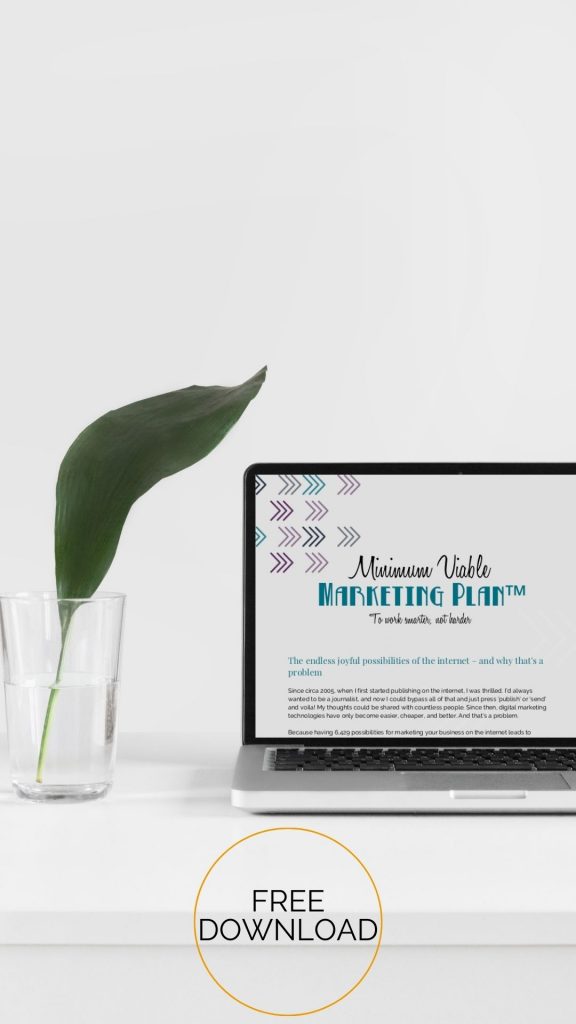
My Minimum Viable Marketing Plan™ is one piece of long-form per month, one email (which promotes your newest long-form content), social media marketing scheduling, and reach-outs. Reach-outs mean that you’re always focusing on building relationships: fostering a social attitude, generosity, following your curiosity, and staying top-of-mind with people.

Optimise your sales process to work to your capacity and communication strengths, and increase conversion.

Using a scheduling tool (I use Acuity Scheduling) and opening only a few defined times per week ensures that you’re not blindsided by a sales call that you’re not prepared for. Each call booked through Acuity necessitates people filling out a form, which means both parties are prepared, and we can use our time well.

Having (very) limited hours is no excuse for leaving people hanging. Remember, it’s not the most qualified person who gets the job, but it’s often the most enthusiastic (in other words, respond to people!).

Following up and pursuing opportunities

There’s no point doing marketing to generate interest if you then fail to pursue and follow up with prospects.

Ensure you have a list of leads with notes against each about when you last followed up, and why. Put follow-up dates in your calendar so that you don’t overlook this.

The Pareto principle applied to your offerings

The Pareto Principle – that 80% of our results come from 20% of our efforts – can be profitably applied to your offerings.

Most business owners invest an inordinate amount of time in offerings that:

a) Aren’t highly profitable
b) Don’t lead to other, more profitable offerings
c) Serve little strategic purpose.

Don’t let the squeaky wheel get the most oil. Implement a ‘minimum engagement fee’, below which you will not entertain.

Be strict with your process around client communications, repeatedly communicate this to clients, and always in their best interests, and ensure that you’re spending time where it’s valued: with clients who are paying well for it.

There are several different strategies you can employ to minimise contact with a client who is unnecessarily jeopardising your time and attention. But these start and end with boundaries.

It’s not enough to state your boundaries; you need to reinforce them. I had one client who kept calling me on a Saturday morning; another made a habit of calling late afternoon Fridays. Both stopped calling when I stopped answering their calls.

Becoming wise

Humans are very talented at filling time and the more time you have, the easier it is to fill it. But creativity loves constraints. The less time you have to run your business, the more you can sharpen your discernment and hone your focus.

It is not the hours invested that grows a business, it’s what you do with the time you have. In just 20 minutes, you can either write and send a proposal that lands a $10,000 job, or make pretty pictures in Canva.

Becoming wise doesn’t happen through reading a book or taking a course. It happens through challenging your thinking, making mistakes, reshaping your environment, backing yourself, and becoming clear on how you want to spend your precious time and focus.

Running your business in minimal hours isn’t easy. It’s hard to exercise self-restraint with emails that seem urgent. But learning how to run a profitable business in minimal hours can be a great first step in ensuring your business is sustainable and that they time and efforts you put in are being well-rewarded. In fact, it could be the smartest thing you’ve done in business yet.

Plan your year in 90-day sprints! Join us at Business Reset.