HustleandHeart
Stories That Sell

Stories That Sell

“I saw you doing a handstand in the Sydney Morning Herald,” the woman told me. “And I thought, that’s the business coach for me.”

It’s not uncommon that people start working with me, already knowing my taste in music, my likes and dislikes, and more. While there’s plenty that I don’t share, the stories that I do mean that clients are primed and ready to go once we start together.

The more of myself I show on the internet, the better my marketing works to attract ideal-fit clients, and to repel bad-fit people.

In a world drowning in marketing and content, small business owners face a paradox: we have never had more choices, yet we’re buying slower, needing more exposure and touchpoints from a brand, and overwhelmed by indecision.

AI videos are starting to creep into my social media feeds. Right now, they’re noticeably AI. But soon, they won’t be. Soon it’ll be impossible to tell the difference between a real person, building influence and an audience, and a bot.

Right now, people are hungry for something – and somebody – who’s real. Right now we’re on the precipice of an AI-generated content avalanche, which also makes now the perfect opportunity for bold business owners to better position themselves as leaders and experts.

Rapport through storytelling

Many business owners tell me that what brings them sales is disconnected to their marketing. Small business marketing is often focused on brand awareness and education, nurturing people with plenty of generous content that offers micro transformations.

But the activities that bring small business owners sales are entirely separate – mostly word-of-mouth referrals and face-to-face, old-fashioned networking.

When I told a business buddy recently that I didn’t really like networking events and only did it sporadically, she responded, “but how do you find new clients?”

New clients find me – through social media, through joining my email list, or being in the audience when I’m speaking or training groups (employed by clients).If your small business marketing isn’t bringing you a steady stream of leads then it’s likely a lack of effective storytelling.

We are surrounded by stories. Humans don’t trade facts and figures. They exchange stories, both online and off. When we share experiences with others – and our thoughts and feelings resulting from these experiences – we’re developing rapport. We’re inviting people into a shared experience, to create a new story together.

When you tell a story online, your audience is not just hearing it, but they’re living it with you. This is why we donate to ‘Go Fund Mes’, why we sign petitions, choose one brand over another, or rave about someone who’s event we attended – because the stories told and experiences shared connect far more powerfully than any list of credentials or achievements.

Any old marketer can declare the importance of storytelling. It’s something else entirely to transmute these stories through screens, to pluck the heartstrings of strangers and make them feel something.

Digital marketing and social media have been mainstream for about 13 years now (pretty much as long as I’ve been training and coaching on it) – so average marketing is no longer good enough.

We’ve had 13 years of developing our ability to smell authenticity and fakery. Smart, discerning people can discern manufactured narratives and performative vulnerability. We can smell an exaggeration a mile away.

And too often, owners hold themselves back, mistakenly believing that the stories worthy of sharing need to be grand or dramatic. Without a rags to riches story, we may count ourselves out of storytelling, missing the opportunity.

Because it’s not just rapport that we develop through screens with strangers when we know how to tell good stories. It’s also the opportunity to shift dominant narratives, to change culture, to help others feel seen and heard, even though we’ve never met.

Trust through storytelling

Recently, at my Reputation to Revenue event in Sydney, a woman (a bloody legend of a leader) flew from Queensland to attend. The last time this woman worked with me was inside one of my programs 10 years ago. For 10 years, this woman has been receiving my marketing emails, waiting for the right time to work with me.

Similarly, the stories you share via your marketing accumulate like deposits in a trust bank, each one adding credibility and building anticipation.
The media is talking about a trust recession – a widespread decline in consumer and societal trust in businesses, digital content, and institutions, increased skepticism, and hesitancy in purchasing.

Never has trust been more important in small business. As an online business, running very occasional face-to-face events or programs, my business cannot afford to wait for word-of-mouth recommendations.

My marketing storytelling needs to be continuously meeting new people where they’re at, demonstrating my expertise, showing my point-of-difference, nurturing through consistently delivering useful, valuable, relevant information, and then moving warm leads into hot.

For hot leads – people who are actively seeking a solution to the problems I solve – my storytelling must be even sharper.

I need to share my approach, proprietary process or expert framework, and show how the point-of-difference inherent in this is also likely the reason why other approaches haven’t worked.

I don’t assume people are naïve virgins who’ve never worked with my competitors, nor attempted to solve their problems by themselves. I assume my audience is intelligent, critical thinking, perhaps a little skeptical, or even cynical. I assume they are empowered, and are repelled by overly simplistic, black-and-white thinking. I assume they’re looking for a thought partner, not a strong-armed leaders who’s going to tell them what to do.

I make these assumptions because these are the people I’m seeking to call in:

  • Critical thinking, intelligent
  • Open minded with liberal politics and a sense of civic duty and shared responsibility
  • Creative and sensitive
  • Open minded and curious
  • Highly experienced, with at least 10 years doing what they’re doing

By respecting my audience and assuming intelligence, my marketing is not going to appeal to a different type of person. And by include some strong opinions in my direct sales storytelling, I’m seeking to deliberately repel people who would be a bad fit for my business. I want people to get an excellent return on their investment, so it makes no sense to work with people who aren’t a good match.

Stories that sell

Some people are excellent storytellers, brilliant at building community and massive audiences. But when it comes to asking their audience book or buy – they fall flat.

Owners tend to fall into one of two camps – they’re great at building community but confuse being liked with being paid and find it hard if not impossible to sell to people they consider friends.

Or their storytelling to sell is like a blunt instrument of insistent, entitled demands, hammering their audience with features, benefits, bonuses and inclusions, and leaving no space for rapport, imagination, trust, wonder, vulnerability, and heart-to-heart connection.

Stories that sell are stories that hook people in, ask them to identify with the very specific situation or circumstance that the business is selling to, and then clearly and concisely educating on the key points of the offer and – this part’s important – inviting the next step with an effective call-to-action.

The missing piece with crafting stories that sell – either through video, written, or audio – is that the owner must embody their message. When the owner is reading a script, playing lose with the truth, or doing the old “do as I say, don’t do as I do”, then the audience picks up that funky smell again.

Walking your talk is absolutely pivotal to create a resonant energy. When your energy is resonant, your story leads to bookings, sales, and clients who commit to your business over the long-term.

When your energy is dissonant, you’re popular, but you’re broke.

Fly Your Freak Flag

Here’s what corporations would pay millions to bottle: your weirdness is your competitive advantage.

And yet, in our haste to be perceived as “professional”, we have dulled down and denied the very thing that is our unfair advantage: that people do business with people.

Your quirks, rough edges, and things you’re a little bit embarrassed about, that you’d prefer your competitors not to know – these very things are signals that help your ideal clients find you. When you fly your freak flag through your stories, you’re not seeking to appeal to everyone. You’re sending a beacon to your people, the ones who will become not just clients, but your advocates.

You are the only one qualified to tell your story. And your story is ongoing and developing, in every interaction, every choice, every moment. It’s not the grand ending; it is the behind-the-scenes dress rehearsal.

You’re not just telling stories, you’re modeling possibilities, showing new ways of thinking, and why this matters. Nobody wants to hear about our values, we want to see them in action.

By sharing real, human, personal stories that reach through screens to pluck the heartstrings of strangers and making people feel something, only then can you propel them to action.

The world is full of big talkers. But people who walk their talk? Who translate deep expertise and passion into words that make meaning for others? People who mean what they say and say what they mean? This is far less common and increasingly important.

So tell your story. Tell it imperfectly, honestly, and often. It’s not just highly profitable, it may just shift the cultural narrative.

Join Ignite Visibility Accelerator: advanced storytelling for leaders and experts.

Make better business decisions, faster

Make better business decisions, faster

Running your own business comes with an endless stream of decisions. Some are exciting. Some are terrifying. Most are tiring.

And if you’re not careful, the mental weight of all these choices can slow you down, burn you out, and keep you busy being busy, with little to show for your efforts.
As an owner on a growth path, decision-making can become a massive bottleneck when teams are waiting to hear back from you. This can have a compounding effect of undermining your leadership, effectiveness, and confidence.

But, with a few shifts in how you think and work, you can make better decisions, faster – and with far less second-guessing. Let’s break it down.

Stop being overwhelmed

The words you use matter. If you keep saying “I’m overwhelmed!!!”, you’re telling your brain that you’re indecisive, drowning, and incapable of clarity.

Overwhelmed typically means you’ve lost the ability to distinguish between important and unimportant things – which is the basis of good decision making.
So if you ARE overwhelmed? Stop your energy leaking all over the place, by saying you’re overwhelmed, and start discerning between fast and slow decisions.

Know the difference between fast and slow decisions

Not all decisions deserve the same amount of energy.

Some are strategic, expensive, and benefit from pondering – these belong in your slow lane:

Others are low-risk – these are your fast lane:

  • Launching a paid live experiment
  • Firing someone
  • Choosing a new software
  • Picking a great headline
  • Deciding whether or not to reply to a DM or email

The key is to pre-sort: which decisions are meaningful and need space and marination? And which need speed?

Do it now

One of the simplest ways to move faster is to stop letting micro-decisions and their corresponding micro tasks pile up.

If something is important and will take you less than five minutes just do it now. No scheduling, no debating, no mental tabs left open. Respond to that email. Approve that design. Record that 30-second video. These tasks aren’t worth the time it takes to add these to your list or calendar.

The five-minute rule is a game changer because it:

  • Builds a bias toward action
  • Reduces background mental clutter
  • Makes you more productive.
  • ‘Just in time’ research

If you find yourself endlessly Googling – stop.

Research is only useful when it’s tied to an immediate decision. Otherwise, it becomes procrasti-research, trussed up as intelligence.
Ask yourself:

  • Am I actually making this decision now?
  • What’s the minimum I need to know to make this decision?
  • Is this research directly feeding my decision, or postponing it?

Don’t go down rabbit holes unless there’s a real decision happening imminently (like, today). You can always learn more later, but right now, focus on what matters now.

Carve out thinking time

For decisions that require time and pondering, these don’t happen while multitasking with 25 open browser tabs.
You need space to think. Time to plan. A date with your creative, expansive, brilliant brain.

Build this into your calendar:

  • Your weekly CEO date
  • Your weekly decision day (inside Audacious mastermind, we have ‘decision parlour’ for this)
  • A 20-minute solo walk with a question in mind.

The busier life becomes, the more important it is to carve out regular thinking time – focused, distraction-free, without media – to ponder, ruminate, and marinate.

Ask yourself:

  • What am I avoiding?
  • What’s a choice that would make everything else easier?
  • What am I ready to move forward on?

Make a list of all the open loops in your brain, set a 30-minute timer, and for each item, either: decide / defer (with a date) / delete.
This can free up a shocking amount of energy.
You don’t need to crowdsource every call. You don’t need more information or advice. Make the call.

Clarity is a byproduct of action

This part is critical: you have to decide. Which means you have to close off other options for now.

And here’s where the common misconception about clarity keeps you stuck – you’re waiting for clarity before you act. But you can think yourself into clarity and you can think yourself out of clarity (and into chaos, overwhelm, confusion, and self-loathing).

Clarity is an inevitable byproduct of taking action – it comes after the decision.

Clarity doesn’t come through delaying the decision. Business learning without application is just procrasti-learning. Real business learning happens when you enact the thing – get results – and then iterate and repeat.

So the next time you feel stuck between Option A and Option B, ask yourself:

“If I already trusted myself, what would I do?”

Then go do it. You’re closer to clarity than you think — it’s one decision away.

The right message at the right moment: know your trigger events

The right message at the right moment: know your trigger events

My client took her family on an overseas holiday – which is all well and wonderful, except that they were on a payment plan with me – which I’d introduced to help them pay off the multiple thousands in invoices that they’d accrued for my company’s marketing support.

This was a trigger event for me – “I’m as mad as hell and I’m not going to take it anymore!”

This trigger event instigated another massive round of changes to my business.

A trigger moment is really important in sales – as well as in marketing. Unique to each business and their ideal client group, it’s the key events when your prospective client is actively deciding to do business with you – or your competitors.

Once we know what our ideal clients’ particular trigger events are, then we use these to drastically increase our sales. Here’s how.

My business’s trigger events

Marketers love talking about funnels, and trigger events are often related to these. For example, someone opens your emails, clicks on a link, visits your sales page, visits this page multiple times, and then clicks through to the checkout, but doesn’t buy.

All these things can be tracked and – ideally – should be tracked. But these are not what I’m talking about.

Instead, I’m talking about the key events in someone’s life which form a pattern in many of your clients.

Let me explain by way of illustration of what my prospective clients’ trigger events are:

  • Business owner is given a ‘hard talking to’ by their business partner, accountant, financial advisor or spouse that they’re not earning enough money in their business
  • Business owner realises that they need to raise their prices – but they’re scared to do so
  • Business owner is experiencing ‘out of control’ growth without enough support and systems around them, and is having trouble sleeping
  • Business owner has had a big life event – such as a divorce, the death of a spouse, children starting school or moving out, etc – and decided it’s ‘now or never’ with going after their big business goals.

How do I know this? Because I always ask prospective clients and new clients – whether in conversation or through a form. These trigger events are recurring patterns from a lot of data I’ve collected over time.

Trigger events in marketing

More talk on funnels! (Excuse my marketing speak.)

Marketers love to talk about ‘top of funnel’ marketing (that attracts new people to you), ‘middle of funnel’ marketing (that builds trust, rapport, and consideration) and ‘bottom of funnel’ marketing (that converts people from browsers to buyers).

While trigger events are more suited to ‘bottom of funnel’, they can be used in all three. For example, ‘identifier content’ is a type of content that asks people to call themselves in. (I teach this as one piece of my Storyflow Framework, inside my Ignite Visibility Accelerator.)

Examples of identifier content hooks

  • “Raise your hand if _____ has ever made you feel _____.”
  • “If you’ve ever been told ____, but knew deep down that ____ was your thing, you’re in the right place.”
  • “If you’ve ever struggled with ____ while trying to ____ , then keep reading.”
  • “If you’re ready to stop ____ and start ____, then let’s be friends.”
  • “You’re not alone if you’ve ever felt ____ about _____.”
  • “If _____ is your superpower, welcome! This account is for you.”

Identifier content can be used to ‘call people in’ at the top of your funnel – by describing your trigger events in surprising or insightful ways. (The easiest way to be insightful? Stop overthinking things and tell the truth.)

But using trigger events in your marketing is most effective for ‘bottom of funnel’ content – when people are about to make a buying decision.

Content that converts

First, a warning. Focusing solely on creating marketing content that ‘converts’ people tends to be the most expensive and ineffective method, if you haven’t already done the hard yards of growing an audience online and building trust and rapport. That’s because it’s most crowded, with lots of competition.

For example, running digital ads to book sales calls is expensive if your audience doesn’t already know you, like you and trust you, through digital content that’s designed to nurture these relationships.

Anyone can claim to be “Australia’s best” or “Sydney’s favourite”, but few are believable.

If you’re bidding on ads for “lawyer Los Angeles”, then expect to pay through the nose for the privilege – as these Google searches signify ‘buyer intent’ (apologies again for the marketing jargon).

But for the sake of argument, let’s imagine you’ve done the hard yards of creating educational, inspirational, relevant ‘top of funnel’ content that’s useful and valuable to your specific target market.

Let’s imagine you’ve built trust and rapport with behind-the-scenes content, skilful storytelling, and sharing your vision, values, mission, purpose. People know who you are and they’re listening and watching. They may have opted into your emails, or be lurking your socials.

So, you create a marketing campaign that focuses on provoking people to take action. Alongside key ‘bottom of funnel’ content such as reviews, FAQs and addressing barriers to purchase, you describe your prospective clients’ trigger events, in great depth and detail.

It’s so scaringly specific, the colour and detail you paint in other people’s mind, that they can’t help thinking you’re some kind of a witch, seeing as how you appear to be telepathic. This specificity is what, ultimately, makes you the best choice for them.

Specific is genius

The more specific your marketing and communications are, the more powerful. The more uncertain you are, the more you tend to default to vague, generic marketing that becomes the elevator music of the internet.

Trigger events are a powerful opportunity to harness this specificity. So much about effective marketing is about timing – the right message at the right moment to the right person.

Knowing and describing your clients’ trigger events is a powerful tool to call in prospective clients and dramatically increase your sales, while making people feel seen, heard, and understood.

Want to learn how? Join us inside Ignite Visibility Accelerator.

Client case study: premium group program sold out before open to buy

Client case study: premium group program sold out before open to buy

I first met Keppie when I enrolled in a short course in song writing at the Sydney Conservatorium of Music. I don’t fancy myself a song writer. But I do follow my curiosity, and when the thought bubbled up that I’d love to try writing songs, a quick Google search later, and I was enrolled in the course.

What I wasn’t to know was that this was the last face-to-face course the teacher, Keppie Coutts, would teach.

The course was brilliant and massively challenging – for reasons to be detailed in another blog post (because deliberately doing hard things regularly is a great practise for business owners, and gave me fantastic insights as a teacher, into how some of my students may feel).

But meeting Keppie was the real treasure.

Keppie Coutts and Benny Romalis together make up ‘How to Write Songs’ (HTWS), a business and YouTube channel they started together in 2021, which they have since grown to a whopping 118,000 subscribers.

Their story showcases content marketing and digital marketing in action – and this case study will highlight many savvy online business strategies, including exponential email list growth using one specific strategy, effective email funnels and sales pages, launch planning, and creating, launching and selling out a new flagship, premium group program – before it’s even open for sale.

Migrating people from socials onto your email list

When I started working with Keppie and Benny in 2023, they’d already started migrating their YouTube subscribers – numbering about 80,000 at the time (now 119,000 at the time of publishing) – onto their email list.

In the space of six short months, their email list had grown from approximately 800 subscribers to 18,000, using a strategy called ‘content upgrades’.

Content upgrades is the offer of additional content (typically in PDF format) that’s closely related to the topic of the free content you’re sharing (in this case, on YouTube), via a sign-up form. Content upgrades typically don’t have much of a funnel behind them, beyond delivery of the PDF, and people were joining the HTWS list from dozens of different video links, on dozens of different topics.

When an email list is growing rapidly, and through multiple entry points, it can create a haphazard experience for the subscriber, and result in higher-than-necessary levels of ‘list churn’ (when subscribers join and unsubscribe in high numbers).

Keppie and Benny engaged me to give strategic advice on email marketing and to create a mega ‘welcome funnel’ for all new subscribers.

Keppie Coutts online programMapping the state-of-play and creating an email strategy

With any business that grows rapidly, it’s easy to create some chaos behind the scenes. So writing an email strategy for How to Write Songs began with mapping their current state-of-play.

Through a VIP Day session, Keppie, Benny and I discussed the ideal client profile for How to Write Songs, all the various paid and free offerings currently available, and what offerings were a match for songwriters at various different points of their journey.

Says Keppie, “Brook took the time to deeply understand our business, our vision, and what makes us tick, so that she could develop our vision, strategy, and tactics.”

From this brain-extracting session, along with data from their YouTube channel, their website, and email marketing software, I crafted the HTWS email strategy, which included recommending that they create a new, premium flagship group program for their ideal client.

Creating a mega welcome funnel

A welcome funnel can be as brief as a single email and is typically 3-5 emails. For HTWS, I crafted an eight-email sequence for all new subscribers, regardless of the email list entry point.

The welcome email funnel was diverse: some emails were based on the most popular YouTube videos and linked to relevant resources; some were pure storytelling, focusing on the relevant stories that introduced Keppie, Benny, and the common shared experiences of songwriters, musicians and music lover; and all emails was useful and valuable to the audience.

“Brook is a brilliant storyteller, seasoned wordsmith, and savvy strategist,” says Keppie.

Every email in the funnel had a different call-to-action and most emails linked to a different paid offering. For all business owners – but particularly for creators such as Keppie and Benny, who give away substantial free value regularly – it’s a smart idea to introduce paid offerings to subscribers straight away.

This could be a tripwire (the first low-cost digital product offered to increase first customer acquisition), but it doesn’t have to be.

By introducing your paid offerings right from the beginning of the email relationship, you’re signalling to your subscribers that you’re a business, not just a content creator, forever giving away highly valuable content.

In mid-December, Keppie put her (then) 20,000 email subscribers through the new welcome funnel. From that point on, any new subscriber who joins the HTWS list, through its various entry points, goes through this email sequence.

Introducing a new premium group offering

HTWS earn revenue from YouTube ads, had a close community in Patreon, a paid subscription services typically for artists and creatives. Keppie and Benny also run periodic live workshops (sold through Eventbrite), and earn regular revenue from their two on-demand courses, priced under $40, on Udemy.

I introduced the idea of a premium offering to test the market for something more substantial than a one-off live workshop or on-demand training, and Keppie and Benny were keen to explore this.

In January 2024, I began one-to-one business coaching for Keppie. Together, we focused on developing a preliminary sales page (to create a waitlist for the premium program), a proper sales page, a launch plan and a sales funnel.

“Brook’s coaching around pricing was absolutely invaluable,” says Keppie. “We initially envisioned selling this at $1000, and thought this would be an epically hard sell.

“But Brook encouraged me to consider pricing from a bunch of different perspectives, including what musicians typically spend on fairly basic guitars. She helped us to aim for a far higher, more realistic number and gave us a solid grounding on the psychology behind pricing, value, and communicating this.”

The final two emails in the welcome funnel that I had written for HTWS included invites to join the program waitlist, through the program’s preliminary sales page.

Within a few weeks, their interest list was already at 400 people, validating the idea that the HTWS audience had an appetite for a deeper, more transformative song writing experience.

But the ultimate validation of any idea in business is when people pay.

Within a few weeks, it was clear that offering one-to-one sales calls was no longer viable due to the size of the program waitlist. Keppie was keen to ensure that people on the waitlist appreciated that this was a premium investment, especially considering the far lower price points of other HTWS offerings, including their live workshops and bootcamps.

Selling through video

I introduced Keppie to one of my favourite tools – VideoAsk – which enables you to have asynchronous sales conversations. This can be far more appealing and less intimidating for potential clients, while also enabling people to ask you any question, share concerns, and have a personal experience with you, the business owner.

Keppie had also used a casual, non-scripted sales video specifically for the program waitlist people, to talk through key aspects of the program. All details covered in this casual sales video were already on the preliminary sales page, but this video adds a personal touch, and is especially good for people who prefer video to reading.

While Keppie and I were confident that the launch strategy would work, the results exceeded our expectations.

Within 2 weeks of the first email with the VideoAsk, Keppie received approximately 100 VideoAsk responses, engaging with potential clients well before the official ‘open cart’ (when the payment buttons are live on the sales page and people can buy).

What happened next continued to outpace our expectations.

VIP spots sold out before open cart

As discussed early, the ultimate (and only real) validation of any new offering is when someone purchases.

To our great delight, HTWS sold out all 10 VIP spots of their new premium program and – at the time of publishing – had sold 7 of the remaining 20 spots.

But the best part? Open cart hasn’t even happened yet.

It looks highly likely that all 30 spots (10 VIP and 20 at the regular price) will be sold out well before close cart, and Keppie and Benny are already scheduling their next launch for their new premium program.

Says Keppie, “Brook is amazing at what she does and has been incredibly important to have in our corner while we go through this massively exciting period of change and growth.”

“I honestly would never have had the confidence, strategy, or understanding how to make this happen without her strategy and hands-on help.”

If you’re keen to create, launch and sell out your own premium group program, that’s specifically what our Leverage mastermind is designed to do. Keppie engaged me for a VIP Strategy session, followed by one-to-one business coaching. 

Launch event trends in online business

Launch event trends in online business

Read this first, if you’re about to launch a course, membership, program, digital product, or new service package.

Some (tired, cynical) owners may suggest that online launching is saturated. Another take: the market is now sophisticated – which isn’t a bad thing! Selling online offerings through ordinary launch events used to be easy (or at least, easier).

Nowadays, people know better.

We have choice. We have competitors. We have lost our naïve enthusiasm (though hopefully, not our enthusiasm).

We’re far less likely to purchase because of marketing razzle dazzle and far more likely to do our due diligence – all good trends for ethical, conscientious business owners like you and me.

Launching is more than just a one-time open-cart/close-cart event – it’s a fantastic opportunity to raise visibility, grow your email list, capture attention and increase your sales. And not just for the offering that you’re launching, since more eyeballs overall tend to bring more sales across your business offerings.

From immersive virtual reality experiences to gamified challenges and influencer collaborations, launch events create buzz, foster community engagement, and ultimately, drive conversions. Whether it’s leveraging the power of live streaming or incorporating interactive elements, the key is to craft a memorable and impactful experience that resonates with your ideal client group.

In this article, we’ll explore the latest trends in virtual launch events for online businesses, the pros and cons of each, and where it may make sense for you.

Remember, there are no rules. You can combine your creativity with strategic execution, to ensure that your launch events are not only profitable, but also fun for you to run.

Free challenges

My Life’s a Pitch! challenge ran in February and was a lot of high vibes and fun, as well as being highly profitable. Eighty per cent of people who joined my Hustle & Heart program afterwards, had gone through the challenge in February, which just goes to show that you can convert people from free, to premium-priced.

Challenges can be awesome because they involve DOING, not just learning. A highly effective challenge focuses on a defined goal or outcome, with practical training given towards that end.

A free challenge can lead neatly into a successful launch because you’ve already demonstrated your results for participants, and at no cost to them. So it’s easy for participants to see how paying to work with you would bring an even higher return for their efforts.

Some key trends in free challenges that make a lot of sense:

  • A small paid upgrade ($10-$97 works well) offered after people register for free enables the owner to neutralise the cost/risk of running the challenge AND giving serious participants massive extra value at a small price. For the second time in our Life’s a Pitch! challenge, I offered a $55 Mentoring Circle across the five days of the challenge. This worked really well, even better than last time, and will be continued.
  • How can you make your challenge as binge-worthy, fun, and potentially viral as possible? Gamify, baby! Everyone loves winning prizes, yes?
  • Surprise and delight: give more than participants are expecting. Within the theme of the challenge, could you introduce surprise expert guests, bonus downloadable resources to complement what you’re teaching, or other delightful surprises?

Pros of free challenges

Building your credibility: When you sell services, you sell promises, so you need to demonstrate that you know what you’re talking about by giving away your expertise online. Free challenges enable you to share generously for a defined outcome. It builds a lot of authority, credibility and engenders trust with your audience. I fondly remember participating in another coach’s ‘$10K in 10 days’ challenge and how satisfying it was to exceed this goal!

Energy and momentum: The vibe and energy created when a group of people come together online, around a shared purpose or outcome is not to be underestimated. Courage is contagious. The momentum created is precious for all involved, including the organiser.

Teaching and training: If you’re a teacher or trainer, a free challenge is likely your style because you get to show off your teaching chops, get outcomes for participants, and (depending on the length of the challenge) give feedback or further insights on their results.

Lead Generation: A free challenge allows you to capture the contact information of interested individuals, providing you with a valuable list of leads to nurture and potentially convert into paying customers.

Cons of free challenges

Your time and energy: Running a challenge is not for low-energy, quiet owners. It requires significant time, effort and energy to provoke and inspire engagement in your challenge. It also requires time and energy from participants. The longer the challenge, the harder it is to get people to engage.

Low engagement is not your fault, but it is your problem: Low or no engagement in business is oftentimes not the owner’s fault, but it becomes the owner’s problem. For example, if I repeatedly register for free challenge or other free online goodies, but fail to engage with them, not only do I NOT receive the benefits, but I may begin to resent the online business world and blame those who I perceive responsible – online business owners. So it becomes our problem when people DON’T engage with your free challenge, don’t receive the benefits, and become more cynical, sceptical and disengaged.

(Makes no sense? Welcome to human-ing.)

Live webinars

Live webinars were the original launch event in the ‘olden days’ of online business. The business owner teaches something useful, valuable, and – most importantly – relevant to the audience, demonstrating their expertise, style and approach, on a topic designed to lead neatly into the launch.

Then online marketers ruined everything (as we do).

Trust was eroded through fake ‘live’ (actually pre-recorded) webinars with fake countdown timers, and even fake comments by dummy ‘participants’. Combine that with over-the-top messaging pressuring people to turn up live (or risk being an idiot) and you have a decline of this launch tactic.

But all is not lost! Webinars can still work wonderfully, when done well.

Some key trends in live webinars that make a lot of sense:

  • Does it need to be an hour? Absolutely not. Could you do it in 40 minutes? Or 20 minutes?
  • Do you need to pressure people into turning up live? Absolutely not. In fact, this can put people off.
  • The topic of the webinar counts for 98% of its success (that is a made-up statistic). Be original! Be memorable. Be specific – specific is genius. Get obsessed by your ideal client group and hone in on a topic that sits neatly in the middle of what they’re obsessed by and what you’re selling (hint: they’re likely NOT obsessed by what you’re selling).
  • To state the bleeding obvious – because common sense isn’t common – don’t lie, don’t mislead. If it’s not live, don’t pretend it is. If you plan to run the same webinar next month, don’t pretend it’s a one-off event.

Pros of live webinars

Engagement: One of the key strengths of live webinars is interactivity, enabling the owner to create engagement, rapport and trust. If you’re genuinely interested in others, good at thinking on your feet and love surprises, then you’ll have an advantage here.

Lead generation: Ads to webinars tend to be higher than other things such as downloadable lead magnets or even ‘on demand’ free video training. But if you’ve got a good grasp of your key metrics, then you can still make PPC ads to live webinars profitable. Make sure you have a follow-up email sequence and don’t abandon your new subscribers, or just add them to your regular emailing.

Live sales excitement: There’s no better rush than sales coming in while the live webinar is still happening (and no you don’t need huge numbers for this to occur, but you do need to have warmed people up beforehand). The sense of urgency and exclusivity can motivate attendees to purchase quickly.

Cons of live webinars

Technical challenges: While I’m a huge fan of simplifying tech and not using more than necessary, live webinars aren’t for those uncomfortable with tech or the inevitable glitches that occur. You need strong internet connection and either a tech VA or a solid ability to troubleshoot (yes, oftentimes in front of your participants) without letting setbacks steal your thunder.

Selling one-to-many: If you’ve never ‘sold from stage’ before, it’s a wild ride! It’s best to seek out more low-stakes opportunities to practise this BEFORE you’re in front of people (who you may have paid/advertised to, to be there). If talking sales and money makes you break out in a cold sweat, this is likely NOT the launch tactic for you (or rather, not right now).

Time and time zone constraints: In an increasingly global world where time is a luxury, the time required to turn up for a live webinar, at a convenient time, in your particular time zone, makes less sense than when quality online learning was far less common. It’s increasingly typical for participants to sign up for a live webinar to “catch” the recording, or to attend a live webinar while driving, eating, or otherwise multitasking. Yes, we know multitasking isn’t ideal, but it’s a bit daft to shame participants for doing this.

Virtual summits

A virtual summit is similar to a conference, involving one or more hosts, and a variety of speakers, focusing on a topic or industry. Virtual summits can be huge, involving dozens of speakers and workshop presenters, run over several days, and featuring internet famous leaders. But they can also be intimate, very niche, and run without fanfare, with minimal tech.

Some key trends in virtual summits that make a lot of sense:

  • Audio-only virtual summits – what’s not to love? Unless you’re doing a technical demonstration, you likely don’t need slides, and participants often appreciate the accessibility and ease of a private podcast for your virtual summit.
  • Highly niche summits to hone in on your ideal client group, and find your weirdos/people.
  • Live Q&A in closed groups, to follow immediately after your (typically pre-recorded) training is released.

Pros of virtual summits

Collaboration and cross-pollination: By virtue of featuring multiple speakers or experts, virtual summits facilitate collaboration and cross-promotion, enabling you to borrow each other’s audiences in order to grow your own. If you’re super strategic and thoughtful, this is a great opportunity to introduce yourself to online business owners you’ve been admiring for some time, and invite them to present.

Low cost lead generation: Virtual speakers can help you generate a large volume of new leads for a low cost (or no cost if you’re a contributing speaker, and not a summit organiser).

Content rich and recycling: The recorded sessions from a virtual summit can be repurposed as evergreen content, extending the value and potential for lead generation, as well as marketing fodder, long after the event.

Cons of virtual summits

Tech and project management: Virtual summits aren’t for owners who aren’t strong with tech. You’ve got a lot of moving parts to organising a virtual summit, requiring significant project management, more communication than you likely appreciate, and solid tech skills, if you’re to pull this off without a mental breakdown.

Participant overwhelm: Virtual summits can easily overwhelm participants who don’t have strong digital boundaries and systems to manage and participate properly. As discussed already, this may not be your fault, but it becomes your problem because overwhelmed people don’t buy (and when they do, they don’t make the best clients).

Virtual summits can be fantastic as a long lead-in to your launch, rather than a launch event proper, which means you could run a virtual summit eight weeks out from your open cart, to increase your leads, visibility and reach, and use other launch events closer to open cart and close cart.

Other notable trends in launch events

Other notable trends in launching include audio-only events, such as an audio-only summit, a free challenge delivered via private podcast, Telegram, WhatsApp or Voxer. Audio events, typically run through private podcast technology, has an intimacy and simplicity which is hugely attractive, while making it easier for participants to engage and, as a result, benefit.

Selling through video is on the up-and-up, but not the glossy, professional sales videos you’ve likely seen. Deliberately casual, non-polished and mobile phone-filmed sales videos can be a great supplement to a long sales page and is part of the trend towards authenticity in business and marketing.

In the age of information, and as digital marketing reaches maturity, it’s easy to lose people in the rush of a launch. So the trend towards one-to-one reach-outs makes a lot of sense.

Whether through video, email or social media, one-to-one reach-outs to people who you either know already, or who are actively engaging in your launch, is a great way to show people that you actually recognise them and are genuinely interested to see if you’d make a good match to work together. No, it’s not “bothering people”, it’s showing them that they aren’t an email address, but a real human who you’re forging a relationship with.

Layering multiple launch events can help build momentum, grow your list, and ultimately, increase your conversions. Think: a virtual summit 6 weeks before open cart, a free challenge (with paid upsell) two weeks before open cart, a series of IGTVs after the challenge, a live webinar on the day of open cart, a live ‘Ask me anything’ three days before close cart.

Yes, I appreciate that this sounds like a lot of work. But if you’re great at planning, and consider how each event would build on the last, creating a series of waves into a crescendo, this could be a lot of fun. And, for course, you want to create adequate buffer for rest and rejuvenation throughout (don’t wait for the end! Sprinkle fun excursions for yourself, throughout).

There are no rules in business (except to exchange cash for value). Everything else is up to you. Any launch event can work when you consider it strategically as well as energetically, and ensure that it suit your strengths, hindrances, and preferences.

I have run launches that have netted me $20,000 or $50,000 without a single launch event (selling through email, with some social media posts), and I have run launch events that have made only a tiny difference to my launch, so don’t feel these are essential to having a successful launch.

But if you take the attitude that everything which raises your reach and visibility is ultimately beneficial, then launch events can be hugely fun, social, and profitable to boot.

11 lessons from 11 years of teaching groups

11 lessons from 11 years of teaching groups

In 2012, when my babies were aged two and three, I started running group courses around Australia, mainly to flee the chaos of working from home with my partner, who is also self-employed.

Friends would see our lives and gushingly say, “you’re living the dream!” But I was knee-deep in nappies, nap times, client phone calls, and other people’s marketing. It looked a lot different from the inside.

My very first course I held in a café in Newtown, on a stinking hot Sydney summer day. Seventeen owners turned up, and I had a blast. A couple of months later, I booked a flight to Melbourne and the rest, as they say, is history.

For about eight years, I ran courses across Australia, in venues large and small including hotels, gorgeous AirBNBs, restaurants, art galleries, and other creative spaces. I wish I’d kept records of all the different groups I’ve led over the years – I’m guessing it would number in the hundreds.

In 2015, I started running my flagship program, Hustle & Heart, and I’ve run countless short and long online courses, classes, keynotes, programs, webinars, conference presentations, and lunch-and-learns since, under my own brand, as well as on behalf of other businesses and training institutions.

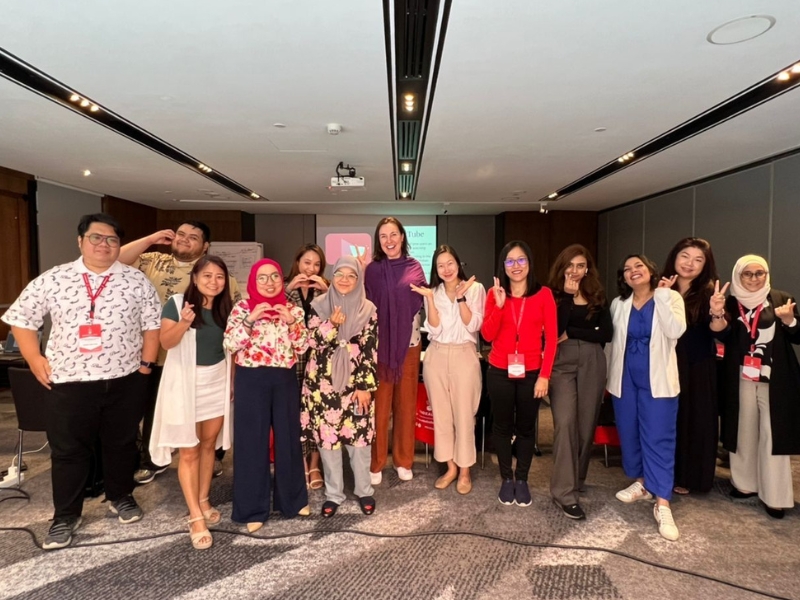
In 2023, I taught internationally for the first time, running five different courses across two trips to Malaysia, on digital marketing and brand storytelling.

Here are the eleven key lessons that I’ve learnt, especially if you’re keen to start, or improve your skills in teaching groups.

1: Your authority has to be claimed

You and you alone must claim your authority to teach or train. And having experience of doing something in just your own business isn’t enough (“I’m proof!” is not proof. Rather, this is ‘evidence by anecdote’).

You need to have broad experience applying your expertise in a wide range of situations, over some years.

I’d been working in online communications for eight years when I began teaching. Before starting my business in 2008 as a digital marketing agency, I’d managed a large website on behalf of a multinational organisation, regularly interviewing, writing, and promoting articles (this was ancient history, before social media, before proper web analytics, when the technology looked very different).

I don’t believe you need qualifications to teach. I’ve met qualified trainers who are terrible and unqualified trainers who are awesome. You get to decide that you’re ready. Don’t let anyone (including me) stop you.

2: The first time will be the worst time

Nobody wants to hear this. The first time you deliver a new course, workshop or program will be the worst time – and the best time, if you stop stressing and criticising yourself and start living in the moment.

Time and again, I witness owners attempting to anticipate the unknowable and plan the unplannable, causing far more stress and work than is necessary.

I take plenty of notes while delivering my first course, including what’s good and what’s not, when chronology has gone a bit awry, and great questions from participants that I can work into draft two. The second time will be 73 per cent better. But you must do the first time to get to the second time.

3: Set expectations and welcome people in

If you love gathering groups together and haven’t yet read The Art of Gathering by Priya Parker, go get it now.

Recently, I attended a small event in Sydney in a private home. I got some automated emails, but none had the address. I was lucky to have the organiser’s mobile number (which wasn’t ideal and wasn’t in any email) and texted her to get the address.

When I arrived, the door was ajar so I let myself in. Nobody greeted me, nor said hi when I walked into a room with a long table full of people talking. (File this under ‘what not to do’).

Etiquette isn’t difficult – it’s mostly about being thoughtful, considerate, and anticipating other people’s needs.

4: Group dynamics are everything

Whether you’re face-to-face or online, group dynamics have a massive influence over the success or failure of a course or program.

I’ve taught the same course or program, at the same venue, with disastrous groups and excellent groups. The dynamics of groups cannot be underestimated.

Take your time in the beginning to settle in, set expectations or seek feedback on group agreements, share names and a little background info, and introduce yourself beyond your LinkedIn bio.

As the trainer or facilitator, you can influence the level of openness in the room by sharing personal or quirky or funny information about yourself, permitting others to do similarly.

5: Give people a quick win

I once called a course participant, asking for her feedback, who told me, “you took too long to give me the first actionable tip. I don’t care about the history of social media.” Fair call.

Too often, we cling to chronology without thinking about our audience – who are there because they want a transformation.

Unless you’re teaching history, forget about giving too much background information.

Structure all your training and facilitation to give a quick win upfront – something highly valuable that causes people to sit up, take notice, and immediately apply what they’ve learnt for significant gains.

This has multiple benefits: it earns people’s trust and attention, it will be remembered far more if it’s at the beginning or the end, than lost in the middle, and it gives you satisfaction, and hence, motivation to do a stellar job.

6: Teaching is far more than knowledge and information

In the age of Google and YouTube, you better believe that teaching is about far more than just information. We buy group programs and online courses because we want a guide to curate only the most essential information and help us to apply it to our unique situations.

I like to factor in a 50/50 ratio of learning and applying, which means if I teach a concept for 20 minutes, then we have 20 minutes to apply this in an exercise, reflect, discuss, and seek feedback. All of my courses and programs have an assignment of sorts that participants complete throughout – whether this is a marketing plan, profit plan, sales page, or email funnel.

Nobody wants to leave a course with a notebook of good intentions that quickly gathers dust, leaving you feeling guilty and resentful.

7: Tap into the wisdom of the group

While teaching/training and facilitation are often discussed together, there is a massive difference between these.

Training is the old-school model from school where the teacher talks from the front of the room. Facilitation is when the facilitator provides resources, questions, exercises, and opportunities to provoke the group to discuss, share, apply and learn together, harnessing the collective wisdom of the group.

A skilled person can move seamlessly between training and facilitation, as the situation requires.

8: Make it relevant to make it powerful

Knowledge is theoretical. When we apply it, we make it practical. Examples from the real world go a long way to illustrate your teachings and how they can be applied.

But the best skill you can cultivate as a teacher, trainer or facilitator, is thinking quickly and speaking confidently, to apply what you’ve just taught to a participant’s unique circumstances.

After 11 years and hundreds of groups, this is one of my superpowers. When we make it relevant to people, we make it powerfully valuable.

9: Feedback is invaluable – treat it as such

Two years of receiving weekly feedback, when I worked as a tour leader in south-east Asia, has given me a thicker skin with feedback. Even feedback that is seemingly irrelevant can hold a kernel of value for you – perhaps if only to show how your marketing needs to change, to better repel the wrong people.

Don’t be so precious that you put yourself above feedback. And if someone is willing to give it, be curious, courteous, and grateful, even when you don’t like what you hear.

10: Don’t be boring

Boring should be a crime. Life is short and other people’s precious time and attention is the most precious thing we have. Don’t squander it by being dull.

I learnt how to be more entertaining by analysing others on stage – noticing why some people appeared dull, and others were entertaining.

Much of this has to do with energetic presence. You can be more entertaining, fascinating and interesting to others by being more interested in others, more present, and thus, more spontaneous. When we’re not caught up in our heads, we’re naturally more charismatic. Plus, your jokes get funnier the more you practise them.

11: Make it simple, not simplistic

“If you can’t explain it simply, you don’t understand it well enough” said Albert Einstein.

Many people misunderstand this and believe the opposite to be true: that something must appear complex and difficult if it’s to be valued. Ha! It takes a lot of skill to make something complex appear easy and simple.

However, simple is not simplistic. We undermine other’s intelligence, while also eroding our credibility and authority when we overlook subtleties, nuances, and exceptions to the rule, in favour of black-and-white statements.

My aim in teaching and training is to always make the complex appear simple and easy. When we can equip our participants with knowledge and empower them to apply it immediately, then gains become exponential, as the gap between knowing and doing disappears.

Would you like to elevate your expertise into a premium flagship group program? This is exactly what we do inside of the Leverage Mastermind.