HustleandHeart
How to fill rooms – and keep people coming back

How to fill rooms – and keep people coming back

This fancy dress wake was the saddest, funniest and most life-affirming that I’ve been to, as these things tend to go together.

Heather Greaves was someone who made you feel special from the moment you met her. She left behind her husband, and two young daughters.

“Heather had very particular ideas about what constituted a party,” her widower Aaron told the colourfully dressed crowd.

“A party needs a theme, and dress ups. The food and music went with the theme. And it needed some kind of performance, in line with the theme.

“A theme, dress-ups, food and performance: if a party didn’t have these four things, it wasn’t a party, it was just a gathering.”

Heather’s philosophy on parties is one I try to enact.

As humans, we are more isolated, more alone, and lonelier than ever. As business owners, this goes double. Businesses need communities around them, to engage, refer, celebrate, commiserate, and mark rites of passage together.

Your online business isn’t just you, your laptop and your chair. It’s not hiding behind a screen, sending the occasional missive into the interwebs, crossing your fingers and hoping that someone’s listening.

If you want to be a category of one brand, if you want to render your competitors irrelevant, if you want your business to feel like a movement, not just a place of commercial exchange, then you need to throw parties.

Gather your community, pull people closer, and for god sake, enjoy yourself.

If you want a client to commit to your business over the long term, beyond delivering value, you also need to give a sense of progression, a reason to return, and a curated community of awesome-type folks having fun.

Types of events and parties for owners

As an extrovert who’s been working alone from home for 18 years, I instigate a lot of gatherings in real life.

When I travel, I tend to instigate meetups. I’ve hosted lunches, dinners, drinks, yoga classes, retreats, and everything in between, from Perth, to Hong Kong, to Magnetic Island and Melbourne.

And I’ve been rewarded – by people who have taken a punt to leave the house to come meet strangers and me, even if I’m just a face on the internet to them.

But there’s many more online events you can run, both free and paid. My Life’s a Pitch!® party is an event that I’ve run nine times over the last five years. A one-off masterclass, sometimes called a webinar or a lunch and learn, is an event.

More recently, I’ve been running – and teaching my clients to run – audio-only events. Similar to what used to be called a ‘live stream’, these are asynchronous audio-only events typically run through WhatsApp, Telegram, Voxer, or any other social media site that supports audio.

A lot of our Momentum Masterminders are enjoying the freedom and intimacy that audio-only events allows. You can make these content-heavy, or story-led. You can lean towards the challenge format, which engages participants in taking some action, or make it more of a fireside chat.

And yes, you can add video too, if you like, and PDF downloads or other tools, as you please. But most importantly, don’t forget to bring the vibe.

Marking your event

An event needs a theme, feeling, and playlist (obviously). Your theme should act as a rallying cry, to call in the freaks and weirdos {LINK} (your weirdos), while repelling those who aren’t your people, and are only going to bring down the vibe.

Your theme needs a story – something that’s easy to understand. This is not a sermon or speech, so don’t get too clever – we need to quickly get the gist and count ourselves in or out.

Our Life’s a Pitch!® party theme is ‘have the audacity to ask’. Our Momentum Mastermind theme is ‘get on a roll’. Our Audacious Mastermind theme is ‘build a life, not just a business’.

Whatever your theme is, your storytelling (marketing copy and copy on your landing page), decorations (branding), costumes (profile pics), playlist (feeling), should all work in unison.

Lay out the welcome mat, and give a clear call to action to invite people in.

The responsibilities of the host

As the host, we’re responsible for setting the tone, and making people feel welcome. We do this through responding to comments (yes, ALL comments) on social media posts, responding to emails (even annoying ones), spelling people’s names correctly, and making folks feel seen and heard.

Feeling seen and heard is a fundamental human driver, and simple to do, if you get your head out of your arse and pay attention to others.

You’ve worked hard to get people into the room. Don’t destroy your efforts by overlooking, patronising, or ignoring. We will forget the fine detail of what you did or said. But we will remember how you made us feel.

The responsibilities of the guest

As a guest, you have a responsibility – to mingle with new people and not just hang with the people you already know, to get the dancefloor started {LINK}, to pass the snacks and drinks, and to lure the socially awkward away from the walls.

As a guest, you do your bit by relaxing into it. You’re not eyeballing the host, anticipating their missteps. You’re gracious, charming, entertaining, and leaving the party in a better state than when you found it.

At an online event, the more you give, the more you get. The more you implement, the bigger your outcomes. Joining endless challenges, downloading endless lead magnets, buying endless masterclasses and courses, and failing to change anything? In business, this is procrasti-learning, or mental masturbation

You know this already – so stop being a know-it-all and start twerking – it’s far more impressive.

Taking social risks

Leaving the house is taking a social risk. Meeting someone new is a social risk. But as Helen Keller said, “Life is either a daring adventure or nothing at all.”
Naturally, we’re not going to love everyone we meet. And they won’t love us either (some people have terrible taste).

In a group, whether face-to-face, or online, or a combination of both (like my Momentum Mastermind, which includes four IRL events a year), we discover ourselves through other people.

We get triggered or provoked. We naturally resonate with some people, we recognise some ‘types’ and we’re intrigued by others. We aren’t meant to love all of the people, all of the time.

Much like our ideal clients and ourselves form a mutual admiration society together, some people don’t fit together. It’s neither their fault nor yours, but you can still respect that person, make them feel seen and heard, and less alone.

My role at a party is to be the dance floor-starter because everybody’s happier when they’re dancing. Much like Heather, I believe a party without a dance floor isn’t really a party; it’s a gathering.

So I take the social risk to be the first on the dance floor because I want the party of pop off.

It’s a small risk to take to model for others how to truly live.

Life’s a Pitch!® party is starting soon! Here’s your invite.

Strippers guide to competition

Strippers guide to competition

It’s a slow night. Your competitors are right there, in their underwear, competing for the few punters who are wandering through. Your ‘pick me’ vibe is seeping out your pores. You know your attitude isn’t where it needs to be, and you know it’ll cost you if you don’t lift your mood.

If you’ve ever thought, “there are so many competitors! How can I possibly compete?!” then welcome to the strippers guide to competition.

So as not to sound like a total middle class nit wit, I interviewed a stripper, who spoke to me on condition of anonymity, on how they play the psychological game of dealing with their competitors, when they’re almost naked, competing for clients, in the same room.

Own who you are

“People want what they want – they want your look and vibe, or they prefer the girl sitting next to you,” she tells me.

“It’s pointless wishing you were otherwise. You can’t change their tastes and you can’t change yourself.”

When you’ve fallen hard and fast for a new competitor’s brand this is easy to forget.

You’re stalking their socials, lurking on their sales pages, and trying to reverse engineer their funnel.

Stop. There’s only one you-shaped you. Your ideal clients and you form a mutual admiration society – so there’s ideal clients lurking on your sales pages right now, too.

“You’ve got to keep your regulars happy, and not get distracted by new conquests all the time,” she tells me. “Your regulars need to feel seen and appreciated. When you make people feel seen and heard, they’ll stay longer, spend more, and come back, with friends.”

Render your competitors irrelevant

The job of branding is not to look expensive or aspirational. Nor is it to look safe and relatable. The job of branding is to emphasise that unfair advantage that you have, by virtue of being you.

You’re not competing with brands that look drastically different because you’re not attracting the same clients.

It’s when your brand looks and feels the same, with pricing that’s plagiarising and offerings which look almost identical. This is dangerous territory.

The most crowded market is mid-range because the middle feels safe. But when your pricing is more-or-less what most are charging and your deliverables are almost indistinguishable – this is when you have a problem.

You render your competitors irrelevant by having a one-of-a-kind brand that can’t be compared.

And the only thing beyond replication is YOU. So don’t outsource your power to AI. Your creative and critical thinking is one of the most important assets you have. Your branding and messaging needs to be owned by you.

A shitty attitude is expensive

“I often felt not good enough,” she tells me. “On nights when my negative self-talk spiralled, I’d make no money as my attitude would repel clients.”

Spiralling into negativity is understandable. It’s easy (and cheap) to indulge in cynicism or scepticism. A full-blown existential crisis can be provoked when your ‘but who am I, really?!’ branding process has gone too far.

After 17 years in business, I’ve indulged in many a shitty attitude – and I can map my mental health over the years in my profit and loss statements.

The 18 months when I lost my business mojo after the birth of my second baby was one giant shitty attitude that cost me a lot.

Nowadays, I work hard on my attitude – including the foundations of good sleep, exercise, good food, and proper weekends. Nowadays, I cannot afford the luxury of a negative thought, especially when I know how much more fun and profitable being upbeat is.

“Some people will like your look, and some won’t,” she tells me. “You can’t change that. Rejection is part of the gig, but there are always plenty more fish in the sea.”

Collaboration over competition

“The nights I made the most money were nights when I’d team up with another girl,” she tells me. “I was the young, fun blonde, with that crazy attitude that’s really attractive to some men. I’d partner with the brunette in her 30s who’s interested in politics.

“We’d bounce off each other and give a way better vibe. The energy we’d create together would be magnetic, and men would be lining up.”

In 2025, collaboration has been essential in my business, as social media algorithms bring diminishing returns, the ‘trust recession’ means prospective clients need a far higher number of touchpoints, and way more trust signals than ever before.

When we collaborate, we’re not just sharing each other’s audiences, we’re also extending our credibility and trust, which means that the people who come to us through others are already warmed up.

Borrowing other people’s audiences has always been my preferred way of building my audience, growing my email list and finding new clients – rather than through reaching cold audience with ads.

Of course, not all competitors make great collaborators. But business owners who don’t even entertain the idea of collaborating with their competitors are letting their low self-confidence take the lead.

Confidence sells

“Confidence is a big turn on,” she tells me. “The most confident girls in the club didn’t have the best bodies or the most skills on the pole. They were simply confident – and they earned far more money as a result.”

You know this already. You’ve likely seen your competitors who have far less expertise, experience and accolades than you do, scoop up great opportunities because they’re more confident.

But there’s a difference between integrity and confidence – too many people confuse these and bundle them together.

Having high integrity and not wanting to compromise on your values doesn’t need to undermine your confidence. Questioning the status quo doesn’t need to undermine your confidence. Appreciating nuance and complexity doesn’t need to undermine your confidence.

When it comes to selling your offerings, you need to be your own hype girl. If you aren’t hyping up your offerings, who is? The value is not self-evident. “If your work is good, it sells itself” isn’t reliable. And you can’t sell a secret.

The good news is that confidence can be taught and courage is contagious. {LINK}

Overthrowing the scarcity mindset

“Women are taught that there’s only one spot at the top, that there’s not enough to go around,” she tells me. “But when we pit ourselves against each other, it’s a turn-off for clients, as well as our own experience on the job.”

We’ve been sold a myth that resources are scarce, and we need to fiercely fight and compete so we can survive. But there are more than enough resources to feed the world.

When women work together, we don’t just make far more money while having way more fun, but we also unpick the ill effects of white patriarchal capitalism.

When you appreciate there’s enough to go around, and realise that power doesn’t need to be hierarchical, but can be power within and between, too, then you’re undoing thousands of years of socialisation that have kept the worst of our society intact.

Our conditioning – our beliefs, opinions, thoughts, and attitude – is one of the last vestiges of control, and arguably the most effective because our conditioning becomes a cage that polices our own thoughts.

Competition is real, yes. But our attitude towards it doesn’t need to be self-defeating any longer.

Ready to change your attitude towards selling, promoting, and competition as collaborators? Time for Momentum Mastermind.

Stories That Sell

Stories That Sell

“I saw you doing a handstand in the Sydney Morning Herald,” the woman told me. “And I thought, that’s the business coach for me.”

It’s not uncommon that people start working with me, already knowing my taste in music, my likes and dislikes, and more. While there’s plenty that I don’t share, the stories that I do mean that clients are primed and ready to go once we start together.

The more of myself I show on the internet, the better my marketing works to attract ideal-fit clients, and to repel bad-fit people.

In a world drowning in marketing and content, small business owners face a paradox: we have never had more choices, yet we’re buying slower, needing more exposure and touchpoints from a brand, and overwhelmed by indecision.

AI videos are starting to creep into my social media feeds. Right now, they’re noticeably AI. But soon, they won’t be. Soon it’ll be impossible to tell the difference between a real person, building influence and an audience, and a bot.

Right now, people are hungry for something – and somebody – who’s real. Right now we’re on the precipice of an AI-generated content avalanche, which also makes now the perfect opportunity for bold business owners to better position themselves as leaders and experts.

Rapport through storytelling

Many business owners tell me that what brings them sales is disconnected to their marketing. Small business marketing is often focused on brand awareness and education, nurturing people with plenty of generous content that offers micro transformations.

But the activities that bring small business owners sales are entirely separate – mostly word-of-mouth referrals and face-to-face, old-fashioned networking.

When I told a business buddy recently that I didn’t really like networking events and only did it sporadically, she responded, “but how do you find new clients?”

New clients find me – through social media, through joining my email list, or being in the audience when I’m speaking or training groups (employed by clients).If your small business marketing isn’t bringing you a steady stream of leads then it’s likely a lack of effective storytelling.

We are surrounded by stories. Humans don’t trade facts and figures. They exchange stories, both online and off. When we share experiences with others – and our thoughts and feelings resulting from these experiences – we’re developing rapport. We’re inviting people into a shared experience, to create a new story together.

When you tell a story online, your audience is not just hearing it, but they’re living it with you. This is why we donate to ‘Go Fund Mes’, why we sign petitions, choose one brand over another, or rave about someone who’s event we attended – because the stories told and experiences shared connect far more powerfully than any list of credentials or achievements.

Any old marketer can declare the importance of storytelling. It’s something else entirely to transmute these stories through screens, to pluck the heartstrings of strangers and make them feel something.

Digital marketing and social media have been mainstream for about 13 years now (pretty much as long as I’ve been training and coaching on it) – so average marketing is no longer good enough.

We’ve had 13 years of developing our ability to smell authenticity and fakery. Smart, discerning people can discern manufactured narratives and performative vulnerability. We can smell an exaggeration a mile away.

And too often, owners hold themselves back, mistakenly believing that the stories worthy of sharing need to be grand or dramatic. Without a rags to riches story, we may count ourselves out of storytelling, missing the opportunity.

Because it’s not just rapport that we develop through screens with strangers when we know how to tell good stories. It’s also the opportunity to shift dominant narratives, to change culture, to help others feel seen and heard, even though we’ve never met.

Trust through storytelling

Recently, at my Reputation to Revenue event in Sydney, a woman (a bloody legend of a leader) flew from Queensland to attend. The last time this woman worked with me was inside one of my programs 10 years ago. For 10 years, this woman has been receiving my marketing emails, waiting for the right time to work with me.

Similarly, the stories you share via your marketing accumulate like deposits in a trust bank, each one adding credibility and building anticipation.
The media is talking about a trust recession – a widespread decline in consumer and societal trust in businesses, digital content, and institutions, increased skepticism, and hesitancy in purchasing.

Never has trust been more important in small business. As an online business, running very occasional face-to-face events or programs, my business cannot afford to wait for word-of-mouth recommendations.

My marketing storytelling needs to be continuously meeting new people where they’re at, demonstrating my expertise, showing my point-of-difference, nurturing through consistently delivering useful, valuable, relevant information, and then moving warm leads into hot.

For hot leads – people who are actively seeking a solution to the problems I solve – my storytelling must be even sharper.

I need to share my approach, proprietary process or expert framework, and show how the point-of-difference inherent in this is also likely the reason why other approaches haven’t worked.

I don’t assume people are naïve virgins who’ve never worked with my competitors, nor attempted to solve their problems by themselves. I assume my audience is intelligent, critical thinking, perhaps a little skeptical, or even cynical. I assume they are empowered, and are repelled by overly simplistic, black-and-white thinking. I assume they’re looking for a thought partner, not a strong-armed leaders who’s going to tell them what to do.

I make these assumptions because these are the people I’m seeking to call in:

  • Critical thinking, intelligent
  • Open minded with liberal politics and a sense of civic duty and shared responsibility
  • Creative and sensitive
  • Open minded and curious
  • Highly experienced, with at least 10 years doing what they’re doing

By respecting my audience and assuming intelligence, my marketing is not going to appeal to a different type of person. And by include some strong opinions in my direct sales storytelling, I’m seeking to deliberately repel people who would be a bad fit for my business. I want people to get an excellent return on their investment, so it makes no sense to work with people who aren’t a good match.

Stories that sell

Some people are excellent storytellers, brilliant at building community and massive audiences. But when it comes to asking their audience book or buy – they fall flat.

Owners tend to fall into one of two camps – they’re great at building community but confuse being liked with being paid and find it hard if not impossible to sell to people they consider friends.

Or their storytelling to sell is like a blunt instrument of insistent, entitled demands, hammering their audience with features, benefits, bonuses and inclusions, and leaving no space for rapport, imagination, trust, wonder, vulnerability, and heart-to-heart connection.

Stories that sell are stories that hook people in, ask them to identify with the very specific situation or circumstance that the business is selling to, and then clearly and concisely educating on the key points of the offer and – this part’s important – inviting the next step with an effective call-to-action.

The missing piece with crafting stories that sell – either through video, written, or audio – is that the owner must embody their message. When the owner is reading a script, playing lose with the truth, or doing the old “do as I say, don’t do as I do”, then the audience picks up that funky smell again.

Walking your talk is absolutely pivotal to create a resonant energy. When your energy is resonant, your story leads to bookings, sales, and clients who commit to your business over the long-term.

When your energy is dissonant, you’re popular, but you’re broke.

Fly Your Freak Flag

Here’s what corporations would pay millions to bottle: your weirdness is your competitive advantage.

And yet, in our haste to be perceived as “professional”, we have dulled down and denied the very thing that is our unfair advantage: that people do business with people.

Your quirks, rough edges, and things you’re a little bit embarrassed about, that you’d prefer your competitors not to know – these very things are signals that help your ideal clients find you. When you fly your freak flag through your stories, you’re not seeking to appeal to everyone. You’re sending a beacon to your people, the ones who will become not just clients, but your advocates.

You are the only one qualified to tell your story. And your story is ongoing and developing, in every interaction, every choice, every moment. It’s not the grand ending; it is the behind-the-scenes dress rehearsal.

You’re not just telling stories, you’re modeling possibilities, showing new ways of thinking, and why this matters. Nobody wants to hear about our values, we want to see them in action.

By sharing real, human, personal stories that reach through screens to pluck the heartstrings of strangers and making people feel something, only then can you propel them to action.

The world is full of big talkers. But people who walk their talk? Who translate deep expertise and passion into words that make meaning for others? People who mean what they say and say what they mean? This is far less common and increasingly important.

So tell your story. Tell it imperfectly, honestly, and often. It’s not just highly profitable, it may just shift the cultural narrative.

Join Ignite Visibility Accelerator: advanced storytelling for leaders and experts.

Client case study: 30% growth

Client case study: 30% growth

Meeting Sonia van de Haar over a group discussion on ‘women, money, identity, power’ was a good way to gauge a feminist founder. I was leading this discussion at a female entrepreneur circle at the University of Technology Sydney in late 2018 and Sonia and I got on like wildfire.

We’ve been working together, and trading feminist memes on Instagram, ever since.

Sonia is an architectural colour specialist – an occupation I would have loved to do myself, if only I’d known such a thing existed! Sonia’s unique cross-disciplinary approach to colour is sought out by architects, designers and private clients who want to use colour thoughtfully and for maximum impact.

Here’s Sonia’s story.

Launching architectural colour design workshop

Lymesmith Crows Nest muralI joined the Hustle & Heart program in March 2019 followed by Brook’s Momentum membership in December 2019, just as I was transitioning my business base from Sydney to Canberra. 2020 was a crazy year and it was great having Brook’s insight and leadership in my inbox and on calls during this time.

I decided to join Brook’s Leverage mastermind in September 2023 because I was keen to start teaching my architectural colour design methodology to architects and spatial designers. Leverage supported me throughout the process of setting up my flagship group program, and in November 2023, I ran my first ‘test’ workshop in Tasmania, for the Australian Institute of Architects.

By March 2024 I was promoting workshops to the email list I had grown during the Leverage program. By the end of 2024 I had delivered 13 CPD workshops around the country.

Sonia van de Haar teaching

It was an absolute joy talking shop with talented colleagues, and the feedback has been amazing, with ⁠96% of survey respondents giving 4/5 or 5/5 stars to their course experience.⁠

Too many architects rely on the same limited colour palette for every project. They’re not thinking of colour in terms of its spatial effects and its interaction with the environment.

Designers are hungry for the tools to design effectively with colour, and need the language to powerfully communicate context-driven colour concepts with their clients.⁠

30 per cent growth

After completing Leverage mid 2024, I joined Brook’s Audacious mastermind because I was growing rapidly and wanted to have Brook’s coaching and support, and a community of female solo business owners to help me navigate these changes, while continuing to make bold decisions.

In 2024, both revenue and profit margins increased by 30 per cent. I was running courses across Australia, and I needed to build my team and support structures to pick up the slack. I had hired an office admin in 2020, thanks to Brook’s coaching, and in 2024, I have brought on a junior designer to help with client work.

Brook and I identified the stress points in my business, one of which was dealing with inquiries, which was taking up a lot of time, energy and stress. We turned this into a paid endeavour; clients now pay $1500 for a site visit, scope and quotation. If they proceed with the quote, this amount is applied as credit against their fee.

This has successfully turned a time suck into a revenue earner. More than 80% of these paid quotations turn into new jobs.

Another thing I wasn’t adequately charging for is project management, which can be significant for mural projects involving multiple people, intensive planning, additional insurances, and other incidentals. I’ve changed my approach to project management, and having more support has freed up my time to make better decisions and budget more accurately.

”A completely different way of being”

Joining the Audacious mastermind has changed my day to day experience of being in business. The constant stress of making decisions is now shared. It’s easy to get overwhelmed by a never ending to-do list and to clearly see what the priorities are when you’re doing everything solo.

As much as I love my family, they’re often the worst people to talk to for support – a sentiment that’s echoed by other Audacious masterminders! Family and friends may be well meaning, but they often express doubts and advise caution, when what you need is support and a cheer squad, in order to take bold action.

After a massive 2024, this year is about consolidating and leaning into what it’s like to not be constantly stressed or struggling to cope – what does that even look like!?

The Audacious community is about supporting each of us to excel at what we do, and have a damn good time while we do it. Our shared goals are to work the way we want to work, to keep ourselves in excellent health, to stimulate our curiosity and creativity and to own our ambitions.

I’ve done everything on my own for far too long and I’m over it! It’s extremely uplifting to be amongst like-minded owners, swapping book and music recommendations, meeting Brook at the spa when I visit Sydney, and actually enjoying the freedom that working for myself provides.

I’ve travelled to far north Queensland with another Audacious masterminder, to attend Allison’s yoga retreat and Allison is now my yoga teacher, leading me through her online classes; her in Townsville, me in Canberra, or wherever I happen to be working, the yoga comes with me.

My next best step

I started my business Lymesmith in 2011 and I sometimes laugh at myself about being a slow learner, because I still feel I need coaching and support.

If you just sign up for a course, it has a start and a finish date. You implement some of the things you learn, until the next crisis shows the gaps in your business. It’s impossible to implement all that you want to do, all at once.

The accountability and community inside of Audacious keeps me on track to continually implement, experiment and commit to working on my business.

At each stage of business, there are new challenges. With regular coaching support it’s easier to spot patterns of self-sabotage and with Brook’s guidance, to unpick these tendencies and move forward.

The regular check-ins from Brook, our accountability coach Kate, and the Audacious members make this far easier.

I hesitated resigning Audacious after my first six months because of the lingering feeling that I ‘should’ be able to do this all on my own. But fuck that! I juggle a million things every day; I work on multiple projects at a time, I teach, travel, market, manage staff and there’s so many creative projects I want to pursue. I don’t want to simplify or ‘give up’ any of the work I enjoy.

Audacious and Brook allow me to carry my ambitions more lightly and not ‘grind it out’. Audacious is about doing everything I want to do, but as consciously, joyfully and vibrantly as possible. Building my team, and having Audacious as my support crew has grown my capacity to take on more ambitious projects.

Creativity and business

Sonia van de Haar LymesmithThe most difficult thing in running a ‘creative business’ is safeguarding my own creative time. It’s a constant goal, trying to get into a flow state so that I can do the design work I love most, and not get bogged down with admin, emails and to-do lists.

The work of running a business is challenging for a lot of creative people. I hate planning, schedules, Gantt charts, spreadsheets, financial reports, and as an introvert, I really do not enjoy marketing or social media, even though I am competent at all of the above and know that it’s necessary!

The ‘unstructured’ structure of Audacious helps me to prioritise creative work every day and to make good decisions – for example, what’s the best thing I can do right now?’

There’s a lot of noise on the internet and many coaches touting their wares. Brook is different! She’s genuine and unique in what she offers.

She’s also a ball of enthusiasm, and great fun to be with. Her keen intelligence and huge passion for helping female business owners to earn good money doing what they love is infectious.

Brook is continually developing and expanding her thinking and what she offers her clients. Her marketing communication gets better and better as she truly walks her talk.

While she’s witnessed my growth, I’m honoured that I’ve also witnessed her growth as a coach. We’ll be on the wild ride of business together for a while yet, and damn it if she isn’t always just up ahead, gesticulating wildly for me to catch up.

Get in touch with Sonia to discuss an in-house workshop for your design team.

Audacious Mastermind currently has two spots open. Join by March 31 to nab yourself a free spot in Ignite Visibility Accelerator. Apply now.

The Reputation Economy: New Rules for Thought Leaders

The Reputation Economy: New Rules for Thought Leaders

In this age of alternative facts, with megalomaniacs in power, checks for misinformation being removed at the rate of knots, and the tsunami of AI ‘fakes’ adding insult to injury, how do we build our professional reputation?

When the world’s largest social media companies have deprioritised content moderation and are busy rolling back other protections for users’ trust and safety, how do we accurately represent ourselves in a way that is believed?

How do we create a personal brand in 2025, when AI is enabling acres of useful, valuable, relevant marketing to be generated in a matter of moments? How do we stand out, build our professional reputation, and render our competitors irrelevant amid changing consumer behaviours and diminishing digital returns?

Done well, your professional reputation becomes a bankable asset – enabling you to command higher fees, reduce marketing costs as opportunities come to you, attract partnerships that further amplify your visibility, and increase your business resilience during economic downturns.

As we navigate through 2025, the rules of reputation-building are shifting dramatically, creating challenges as well as opportunities for consultants, coaches, experts, and thought leaders.

The new world of influence: Branding, publicity, SEO, social partnerships

When I left the Public Relations industry in 2007, it was at the precipice of the explosion of social media. This wreaked havoc on the PR industry, pitching old school broadcast media, reputation-management PRs who were slow to embrace digital, against the rising new breed of digital and social media natives, who had far less idea about the nuances of credibility and authority.

My proprietary Influence Framework was developed out of this need for an omnichannel, holistic approach to building influence, through a combination of PR and publicity, SEO and content, digital marketing and networking — not as separate disciplines, but as interconnected elements of a cohesive reputation strategy.

Today’s most effective PR strategies focus on creating genuine relationships with platforms and people, which could include podcast appearances, influencer marketing and user-generated content (UGC), speaking engagements, or collaborative content with complementary experts.

Everything is interlinked; when you appear on a podcast, the backlinks from that show’s website boost your search visibility. When you’re quoted in an industry publication, those mentions create digital breadcrumbs that lead new audiences back to your platforms.

Google’s algorithm values expertise, authoritativeness, and trustworthiness (E-A-T) more than ever, which means that your content must demonstrate deep knowledge, while also building strategic associations (read: backlinks and website appearances) with relevant, established, credible platforms.

AI has fundamentally altered how we approach search visibility. With AI search assistants providing direct answers rather than lists of links, your content must now be structured to address specific questions with exceptional clarity and depth.

The omnichannel approach has become non-negotiable. Your reputation exists across multiple platforms simultaneously, and while you absolutely don’t need to be everywhere, having a strategic presence on key platforms creates a powerful network effect, with each touchpoint reinforcing your credibility exponentially.

When someone discovers you, you want them to have a Netflix-binge-worthy experience of you – with a ‘go to’ body of work where they can quickly understand your insights, opinions, and ideas

This integrated approach to PR, SEO, and digital marketing doesn’t happen by accident. It requires insight into how the differing elements work together to build your professional reputation.

Credibility through character

Julia Gillard, Australia’s first female Prime Minister and feminist icon, aided by her viral misogyny speech, was repeatedly reminded that she voted against gay marriage. Her credibility suffered. Admitting that she ‘got it wrong’ went a long way to rebuilding that credibility.

Gillard demonstrated something valuable here – that it’s okay to get it wrong or change your mind – in fact, it’s far preferrable to mistaking integrity for obstinance.

Your professional reputation isn’t just about being known – there are plenty of people who are well known for all the wrong reasons – it’s about being known for something specific and valuable, that’s actually representative of who you are.

You can buy authority, via a talented PR team and behind-the-scenes people. But you cannot buy credibility.

The foundation of any lasting professional reputation is character. In a sophisticated market, audiences have developed a sixth sense for authenticity; we expect transparency and when it’s not given, it’s easy enough to uncover it. In a sophisticated market, we can see when someone is genuinely passionate, or simply chasing trends or engagement metrics.

True credibility emerges from a combination of expertise and genuine character. It’s your everyday small decisions, habits and routines, your emotional regulation when under pressure, your apologies and clarifications. Otherwise known as walking your talk, doing what you say you’re going to do, and how you act when no one is watching.

Your digital footprint – including your comments on other people’s posts, in forums where you believe confidentiality is assured – will be accessible for years to come. Rather than let this to become self-censorship; instead, recognise this invaluable opportunity to get to know yourself, trust yourself, and live in alignment with yourself.

Technology may change, but the fundamental human desire to work with people we trust remains constant. In this new world of influence, establishing credibility through character isn’t just good ethics — it’s good business.

Don’t outsource your creative thinking

Resist the temptation to outsource the very thing that makes you unique – your thinking. By all means, delegate the heavy lifting, but hold onto your original insights and hard-won perspectives.

While your opinions, insights and perspectives may be shared by others, your stories from which these sprung are unique to you alone, and must be told if they’re to be remembered, and repeated.

When the commodity of the age of information is our attention, then the most valuable currency in the attention economy is original thinking.

Anyone can repackage existing ideas – business books are full of them – but those who contribute fresh perspectives, challenge common wisdom, or synthesise established concepts into new approaches, create intellectual value that builds remarkable reputations.

This is the edge of where reputation- and publicity-building and thought leadership blur – because thought leadership is not marketing, and marketing is not thought leadership.

You can be a genuine thought leader with next-to-no marketing nor visibility, and you can have high visibility and a solid reputation, without being a thought leader. Confusing the two is where delusion resides.

This doesn’t mean that your every insight must be revolutionary. Sometimes, your unique value comes from explaining established concepts with exceptional clarity, applying principles across different contexts, or simply articulating what others think, but struggle to express.

Outsource the amplification of your thinking, but ensure your core ideas, densely branded language, and expert frameworks remain uniquely yours.

Our response to controversy is important

Leaders are forged in hard times, not good. The question isn’t whether or not you’ll encounter controversial topics – it’s how you’ll navigate this when it inevitably arises.

In March 2020, I unfollowed and disengaged from a marketer I had respected for years, when she jumped onto an international flight, seemingly to put herself at the centre of the action.
Controversial engagement may create short-term visibility, aided by algorithmic amplification, but it’ll erode your hard-won credibility.

Every field has fault lines, of competing methodologies, ethical dilemmas, or shifting best practices; how you position yourself relative to these tensions communicates volumes. You don’t need to have an opinion on everything, but avoiding controversial topics is the faster way to become the elevator music of the internet.

Approach potential controversy with intention rather than reaction, which means:

  • Choosing which discussions warrant your engagement
  • Responding thoughtfully rather than impulsively
  • Focusing on adding clarity to complexity, rather than taking sides
  • Maintaining respect for those with different perspectives

Your response to controversy signals your intellectual integrity, emotional intelligence, and professional judgment. Leaders who can contribute to divisive topics with nuance, clarity and respect build far stronger reputations far faster, than those who avoid difficult conversations entirely.

Your reputation is a bankable asset

Establishing your professional reputation isn’t merely a nice-to-have — it’s a quantifiable, bankable asset that creates a competitive advantage. When potential clients or partners can easily discover your expertise through multiple channels, when your name consistently appears in conversations about your field, when the ‘word on the street’ about you is generally positive, you’ve built an asset that generates opportunities for years to come.

This asset appreciates over time, creating exponential, compounding returns. Like any valuable asset, your reputation-building efforts need to adapted to changing market conditions, technological shifts, and evolving client needs.

Professionals who recognise their reputation as a strategic asset invest in it consistently, measuring returns not just in immediate revenue, but in long-term growth opportunities.

Need to grow your reputation? Time to say something worth listening to. Time for Ignite Visibility Accelerator.

2024: Behind-the-scenes of a rocky year

2024: Behind-the-scenes of a rocky year

It’s true: things are very different now to what they were in 2020. In fact, the bubble of free money floating around at that time make any strategies that worked then irrelevant now.

2024 hit differently. With so much negative political and economic news and events happening, it required an immense amount of self-trust and courage, to make optimistic decisions, and to pitch, launch, and sell.

Despite a bumpy start, I decide that I was overdue a promotion and pay rise in 2024, so I increased my take-home pay by 10% per month at the start of 2024, and gave myself a few bonuses along the way.

In this article, I’m going to share the behind-the-scenes of my 16th year in business, in the hope that you’ll find it useful and valuable. Grab yourself some cake and settle in.

In this article, I cover:

What I sold in 2024

As always, I used the Momentum Effect to plan promotions and launches around travel.

I ran three workshops back-to-back in late January, which I dubbed ‘the Summer Series’, made up of the three major components of running a business: you and your brand; your ideal clients; and your offerings ecosystem. This was around a trip in early January to Crooked Corner and Port Stephens, both in New South Wales, Australia.

In February, I opened the doors to my flagship Hustle and Heart program, preceded by my popular Life’s a Pitch!® party. In March, I travelled with my partner to Hong Kong for work, leaving the kids behind.

Since late 2023, I promoted my brand new Audacious Mastermind, and we kicked off with our first group call in March. I was still running my Leverage Mastermind, which started in September 2023, when I was travelling in Italy with my family, and finished up in June 2024. It was sad to say goodbye to owners that I’d been working with intensely over nine months, to create, launch and sell-out their flagship group programs.

March 27, I ran my Guest Speaking Masterclass, which was a topic I was hugely excited by, having done this strategy for the entire lifespan of my business – borrowing other people’s audiences in order to grow your own – while getting paid in the process.

What surprised me about this masterclass was how many people purchased the masterclass with no intention of turning up live – I concluded that, if the topic is strong enough, the need to turn up live was less important for people. Guest Speaking teaches people how to get paid to increase their email list, generate leads, and land new paying clients, while improving their presentation skills.

In fact, that’s what all my lower priced offerings have done this past year – bringing people successfully from low-priced to premium priced in one fell swoop – someone from my $212 Offerings Ecosystem masterclass in January turning into a new one-to-one business coaching client, and people from my Guest Speaking masterclass in March also becoming new one-to-one coaching clients.

In May, I took a big family trip to Canberra to celebrate my brother-in-law’s 40th birthday. How gorgeous is Canberra in Autumn??

In June, I ran another Hustle & Heart program launch, preceded by my new free program, Amplify, which I ran through Telegram. The first cohort ran February until July; the second cohort ran June until December. After a big June of launches, content events, and work, I took off in July for a yoga retreat by myself, followed by the Blue Mountains with my family.

In August, I sold a brand new Visibility Accelerator, called Ignite (as my client Sonia pointed out, it appears I’ve developed a preference for single word offering names!). Ignite is specifically for thought leaders, experts, consultants and coaches who want to say something worth listening to. Ignite ran for six weeks, and I loved every minute of it, so much so that I immediately started promoted the second cohort, which kicked off in October.

The first time you run anything is always the best and worse time, so I’m always eager to run something a second time, as quickly as possible, to iterate on what I’ve learnt in the first run.

After a big August of promotions and launches, my family and I went to Spain and the UK for three weeks (we left the kids in the UK with my in-laws to escape to Spain to celebrate 21 years of togetherness), returning in mid October.

In November, I ran Business Reset, which was great fun, getting together to spend a full day with business owners, online, from all over Australia.

In November, I also ran Catalyst, a new, face-to-face program in Sydney, for owners, consultants, coaches, who want to turn their expertise into assets to leverage, and diversify their income streams. Again, because it was the first time – and we sold out – I set another date almost immediately, which is in February 2025, with a third of spots already gone.

I also ran a series of short promotions for my new Audacious mastermind and, by the end of the year, nine out of our ten spots were claimed.

In December, I went to Margaret River with my partner just before Christmas, to celebrate a friend’s 50th.

Highlights of 2024

Without a doubt, 2024 was the year of experiments. I launched three new programs: Audacious Mastermind, Ignite Visibility Accelerator, and Catalyst, as well as my new, free Amplify program, which I ran twice, through Telegram the first time, and the second, through WhatsApp.

I did a lot more content events, including running our popular Life’s a Pitch! party twice (in February, leading into the Hustle & Heart program and in August, leading into the Audacious Mastermind). I also did two free webinars, one without slides, which I’d never done before.

I’m proud of my marvellous Audacious Mastermind, which is more than I could have hoped for, full of interesting, intelligent, creative, ambitious owners who are going after what they want. We had multiple face-to-face meetups through the year, as I travelled to places where members lived, and two flew to far north Queensland to attend a yoga retreat of another Audacious member.

Our Audacious group gives me life, and I’m busy plotting how to make it even better in 2025.

Other highlights of 2024 include facilitating two days of vision, mission, values, purpose for the executive team of Pace Farms, Australia’s largest egg producer. Four out of six on the exec team were new, including the CEO. The topic was great, but it’s always the people who make or break something, and this small group was exceptional.

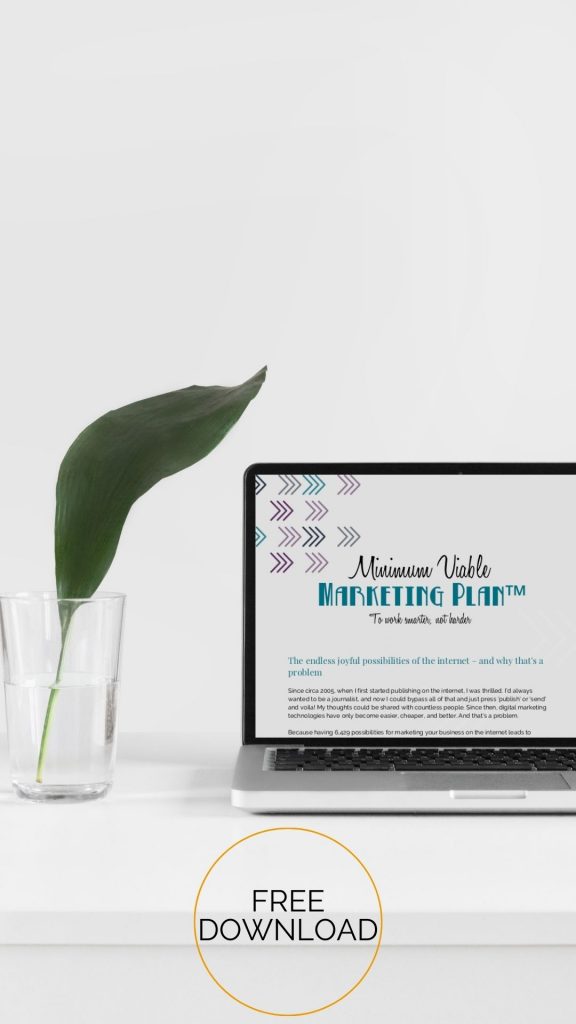
In September, I spoke at the Content Byte Summit at Sydney’s Maritime Museum, on the topic of ‘Creating a Marketing Plan that you’ll actually stick to’, where I introduced my Minimum Viable Marketing Plan™. I was also in conversation, the day prior, with the keynote Austin Church, on the topic of money and pricing – always hot-button topics for the self-employed.

Despite 2024 being far from ‘easy’, I earned more this calendar year than any of the 16 years prior. Interestingly, between the first six months of 2024 and the last, my revenue increased 58% and my profit 84% (see why, below). While the market appeared to contract and grow conservative, I did the opposite: investing in Meta ads, SEO, and email marketing, particularly in the second half of the year. When everybody contracts together, everybody loses.

Disappointments in 2024

In 2024, I worked harder than ever on promoting, marketing, and selling. People appeared to need more direct sales, offers, and promotions than prior years. There was a general malaise and inertia which, as a person who works hard at being upbeat, I sometimes found draining when I wasn’t strict enough with my energetic boundaries.

Not all experiments are successful of course, and one disappointment for 2024 was that an awesome business retreat that I was planning with my friend and colleague Belinda Weaver didn’t go ahead. We made the mistake that I repeatedly tell my clients not to make – spending far too long on the behind-the-scenes details while postponing the marketing and promotion. Especially for an overseas event, and for higher priced offerings, people need as much of a runway as possible. \

Unfortunately, by the time we were actively marketing it, it was too late in the game, and, after several sales conversations with prospective clients, we decided to pull the pin.

This meant that I was preoccupied in the first half of the year, and I needed to rally in the second half of the year, as I’d invested time, money and effort that wasn’t going to see a return.

My best-performing marketing in 2024

In 2024, I doubled down on content events, which include webinars, challenges, and other free offerings, delivered live. The live delivery elements makes these different to lead magnet (of which I am the Queen) and the appeal is precisely this – by enabling people to have a real life, real time experience of your expertise and approach, people can then decide whether or not you’re their flavour of ice-cream.

Particularly in the second half of the year, when I doubled down on content events and promotions, this worked a treat for people to call themselves into my Ignite program, Audacious mastermind, and the Hustle & Heart program.

In 2024, I increased my average mass email send, sending 71 mass emails over 2024 (up from 54 mass emails in 2023). I sent many many more emails to smaller, targeted segments of my list.

My top-performing email subject lines for 2024:

Forget funnels, think ecosystems
Becoming a mind-reader
The problem is you
New offerings; creative supernova
{OPEN} We’re open! ⚡️
Client magnet
Just ask 👀
Get paid to grow your leads
From crises – to starting my business in a week
I’m opting out of the recession

In addition to content events and email marketing, Google continues to bring me a steady stream of qualified leads (I teach digital marketing and walk my talk, so I rank well for relevant searches).

My podcast has been a joy to create, but it’s still a lot of work, despite having a process bedded down, plus outsourcing some aspects of it, including audio editing. The Vulnerability of your Visibility was my best performing podcast episode this year.

In 2024, social media algorithms kept us jumping through hoops. The B-Roll style Instagram Reels that were easy to chuck together and performed so well in 2023, reduced in impact. Instead, I’ve put most of my effort on Instagram into direct-to-camera stories (which I teach inside of Ignite) and carousel posts, though Reels are still performing, if you’ve nailed your topic. This was my best performing Instagram post this year.

LinkedIn is the other major social channel that continues to perform, though I find it far less appealing and fun than Instagram. This was my best performing LinkedIn post this year.

What I’m doing differently in 2025

I really enjoy digital marketing, business development and sales, which is a good thing, since that’s what I do! However, I do put more effort in than justifies the results I’m sometimes getting back.

So, in 2025, I want to hone in on what’s working, and drop marketing activities that aren’t performing. I’m going to continue to do the marketing activities that I really love, but I’m going to do less, and do it better.

By freeing up more of my time, I can focus on writing more about topics I’m passionate about that aren’t strictly business, such as intersectional feminism, why humans need each other (and how to make friends and be a good friend as an adult), the importance of joy, and how humans make meaning (and derive meaning).

Several years ago, I used to write for media on any topic my heart desired. Nowadays, I rarely have writing published that isn’t business related. In 2025, I’d like to do far more writing in news media.

Future trends I’m paying attention to

Same as last year, the advent of generative AI means that our point-of-difference is more important than ever. Which means saying something worth listening to – turning up the volume on your opinions, story, unique approach (this is why I created Ignite Visibility Accelerator. And also because I’m afraid for the increase in self-censorship that I witness among owners and leaders).

In 2024, I launched my first face-to-face program, Catalyst, since 2019. I taught face-to-face business courses in Sydney, across Australia, and internationally, between 2012 and 2019, so it was a welcome return. Nothing beats warm bodies in a room.

And despite the rise of flakiness, I know people crave face-to-face events, so watch out for more face-to-face gatherings in 2025 (subscribe to our Hustle & Heart calendar so you don’t miss these).

What I’m looking forward to in 2025

I’ve wasted a lot of time in my business stopping myself from doing things I want to do, out of fear that I’ll confuse my audience, dilute my message, or waste my energy. But the fact remains that I’m creative and I love novelty. I don’t find it hard to have multiple free and paid programs on offer or run multiple groups concurrently; I find it invigorating. I reuse, reduce, and recycle as much as possible, leveraging myself through assets, smart systems, and support.

I don’t want to change anything drastically – I’m looking forward to doing more of the same. A solid, sustainable, growing business is supposed to be a bit boring, especially for types like myself who crave novelty.

At the risk of sounding sappy, I love my business and cannot believe that I’m doing what I’m doing. Helping owners and leaders to get what they want is, in my opinion, the best job in the world.

My personal focus in 2025

As always, I have a lot of travel planned for 2025. And being an Australian, those long-haul flights are a killer, so my family and I tend to stay away for several weeks.

In 2025, I hope to strengthen my systems and support of my small and savvy virtual team, to impact my clients and business as little as possible while I’m travelling.

Making my business travel-proof also means making my business malaise-proof, disaster-proof and life-proof. Because it’s easy to sell and grow when you’re feeling on top of things. It’s far harder when life hits you in the guts, which it always does, and the more I can create systems and structures that weather this, the stronger my business is.

My focus for 2025 is also continuing the shift of my ideal client group – I want to work with owners and leaders who are unapologetically ambitious and energetic. And while some days we’re just not feeling it, I’m don’t want to spend my limited, precious time with owners who have modest goals and are stuck in self-censorship and overthinking.

I’m 17 years in business this year, and I have no time to waste. Life is short. And oh so exciting.

Isn’t it past due that you gave yourself a Pay Rise?

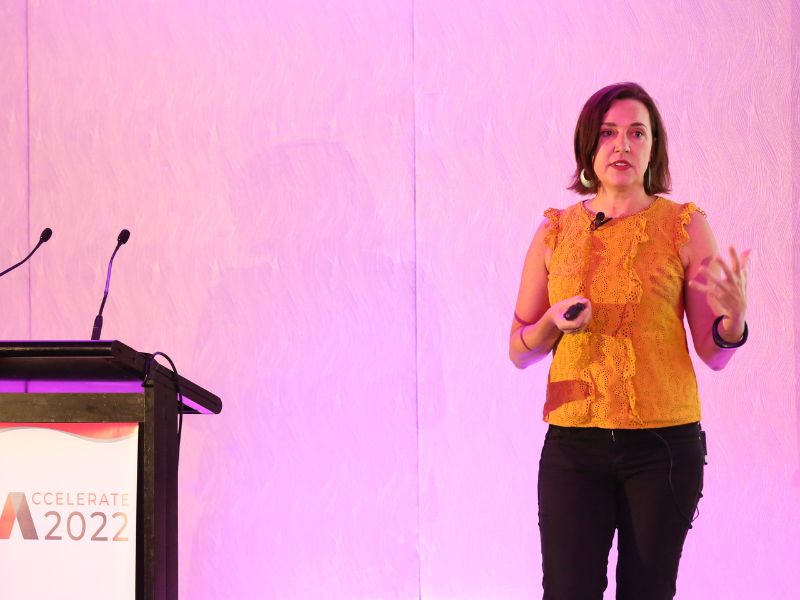
(Pic of me speaking at the Content Byte Summit by Jade Warne of Small Business Growth Club.)